Chinese Family Values Explained: Culture & Language Guide
Key Takeaway:
This comprehensive guide explores the deep-rooted Chinese family values that form the foundation of Chinese society and relationships. You'll learn about filial piety (孝道), the importance of family hierarchy, and how these cultural values influence daily life and communication patterns. The article provides essential Chinese vocabulary for family members, explains how family relationships affect language use, and offers practical insights into modern Chinese family dynamics. Whether you're learning Mandarin for personal or professional reasons, understanding these cultural concepts will significantly enhance your ability to communicate effectively with Chinese speakers and deepen your appreciation of Chinese culture. Discover how family values shape everything from business relationships to social interactions in Chinese-speaking communities.
Imagine walking into a Chinese home and being immediately struck by the warmth of family connections that seem to transcend generations. As a Mandarin tutor at Candice Mandarin Tutor, I've seen countless students struggle not just with the language itself, but with understanding the cultural bedrock that makes Chinese communication so unique. Family isn't just an important concept in Chinese culture—it's the very framework through which social relationships, business interactions, and personal identity are understood. When you grasp these fundamental values, you're not just learning vocabulary; you're unlocking the code to meaningful connections with Chinese speakers worldwide.
The Foundation of Chinese Family Values
At the heart of Chinese family values lies filial piety, or 孝道 (xiào dào), a concept that has shaped Chinese society for thousands of years. This isn't merely about respecting your parents—it's a comprehensive system of obligations, responsibilities, and deep reverence for one's elders and ancestors. In traditional Chinese thought, the family functions as a microcosm of society itself, with each member having clearly defined roles and responsibilities. The father provides and protects, the mother nurtures and manages the household, and children show obedience and respect. This hierarchical structure might seem formal to Western eyes, but it creates a powerful sense of security and belonging that many Chinese people carry throughout their lives.
Understanding these values becomes particularly important when you're learning Mandarin because family relationships directly influence how people communicate. The way you address someone, the level of formality you use, and even the topics you discuss are often determined by age and family position. For Beginner learners, this can initially feel overwhelming, but recognizing these patterns will dramatically improve your conversational skills. The good news is that as you progress to levels like hsk 4, you'll find yourself naturally incorporating these social nuances into your speaking.

Key Chinese Family Relationship Terms
One of the first challenges Western learners face is the elaborate system of Chinese family terminology. Unlike English, which uses simple terms like “aunt" or “cousin," Chinese specifies exact relationships. Your father's older brother is 伯伯 (bó bo), while his younger brother is 叔叔 (shū shu). Your mother's brother is 舅舅 (jiù jiu), and her sister is 姨妈 (yí mā) if she's older or 阿姨 (ā yí) if she's younger. This precise vocabulary reflects the importance of understanding exactly where everyone fits in the family structure.
Mastering these terms requires practice and a good memory system. I often recommend creating family trees or using flashcards that show the relationships visually. When you're working on your Speaking skills, try describing your own family using these specific terms. It might feel complicated at first, but this precision is what allows Chinese speakers to immediately understand family dynamics without lengthy explanations. The grammar behind these terms is relatively straightforward, which makes them accessible even for those still working through basic grammar guides.
Modern Evolution of Chinese Family Dynamics
While traditional values remain strong, Chinese families have undergone significant transformation in recent decades. The One-Child Policy, which was in effect from 1979 to 2015, created what's often called the “4-2-1" phenomenon—four grandparents, two parents, and one child—concentrating family resources and expectations on a single descendant. Though the policy has been relaxed, its effects continue to shape family structures and relationships. Urbanization has also changed family life, with many young adults moving to cities for work, creating physical distance from their extended families.
Yet despite these changes, core values persist. Adult children still feel strong responsibility for their aging parents, and multigenerational households remain common. Major holidays like Chinese New Year see the largest annual human migration on earth as people travel home to reunite with family. Understanding this balance between tradition and modernity is crucial for anyone interested in Chinese culture articles or developing genuine relationships with Chinese people. The family remains the primary source of emotional and financial support throughout a person's life.
Family Values in Business and Social Contexts
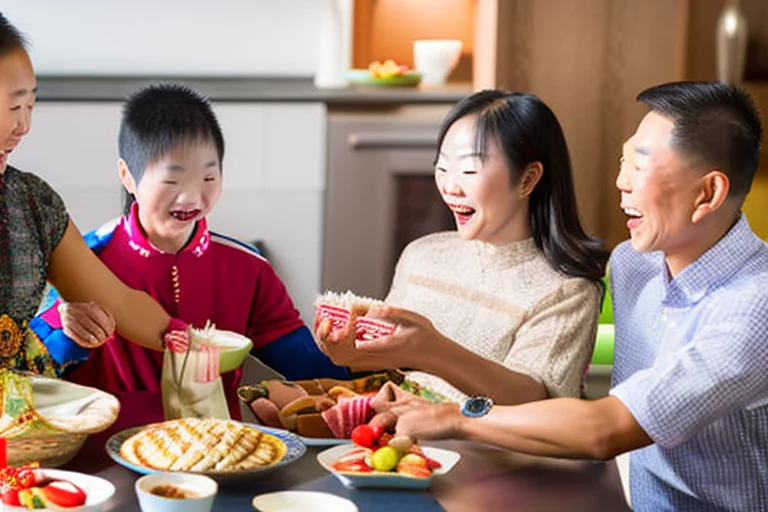
Chinese family values extend far beyond the home and significantly influence business practices and social relationships. The concept of 关系 (guān xi), or connections, often begins with family networks. Business partnerships frequently develop through family introductions, and trust is built more quickly when you have mutual family connections. This is why you'll often hear Chinese people asking about your family background early in a relationship—they're not just making small talk but positioning you within their understanding of social structures.
In social situations, you might notice that Chinese people often use family terms for non-relatives. An older male friend might be called 叔叔 (shū shu), or an older female acquaintance 阿姨 (ā yí). This practice, which can be confusing for language learners, actually reflects the cultural tendency to frame relationships in family-like terms. It's a way of showing respect and creating familiarity simultaneously. When you're learning about aspects of Chinese culture like Chinese Tea Culture, you'll notice these family values often influence even the most formal traditions.
Practical Language Learning Applications
So how can you apply this understanding to your Mandarin studies? Start by incorporating family vocabulary into your daily practice. Describe your own family using the specific Chinese terms, and ask Chinese friends about their families using appropriate questions. Pay attention to how family relationships influence verb usage and sentence structure—for instance, how the particle zhe-particle might be used when describing family activities. These small adjustments will make your Chinese sound more natural and culturally aware.
Remember that language learning isn't just about memorizing words—it's about understanding the cultural context that gives those words meaning. As you advance in your studies, you'll find that grasping Chinese family values will help you navigate everything from business meetings to casual conversations. For those looking for structured guidance, checking out beginner tips can provide a solid foundation before diving into these more complex cultural concepts.
Ready to deepen your understanding of Chinese language and culture? Consider booking a personalized Chinese lesson where we can explore these concepts in depth. Learn more about my personalized teaching approach that incorporates cultural insights alongside language instruction. Have specific questions? Feel free to discuss your Chinese learning goals with me directly, and don't forget to view my lesson pricing to find an option that works for your budget and schedule.