Chinese Tea Culture: Complete Guide to Tea Ceremony, Etiquette & Types
Key Takeaway:
Tea isn't just a beverage in China—it's a 5,000-year-old cultural treasure! Discover the art of Chinese tea ceremony, proper tea etiquette, different tea types, health benefits, and why tea remains central to Chinese social life today.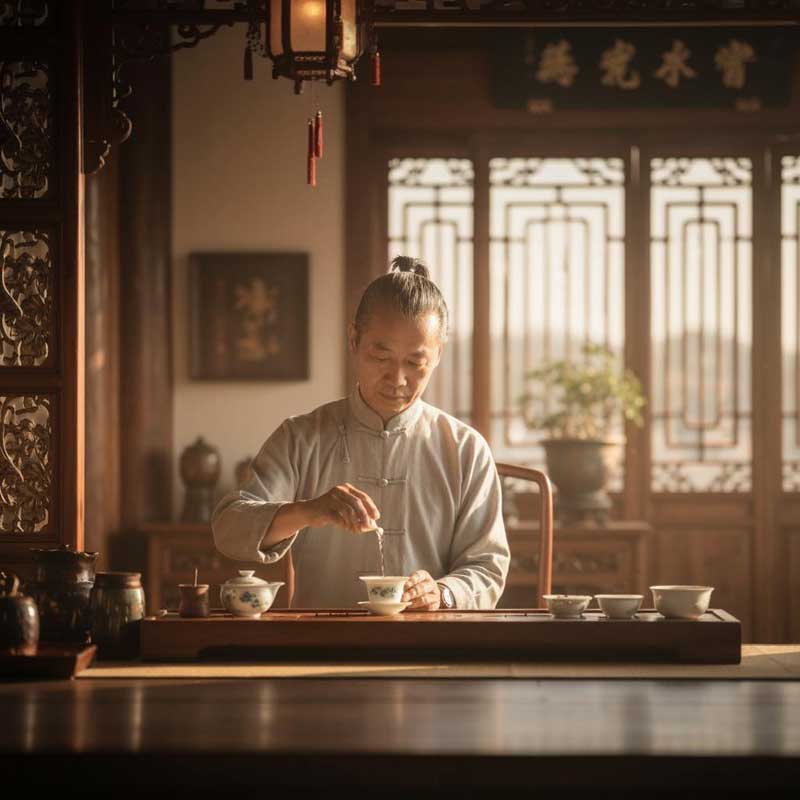
In China, tea isn't just a drink—it's a way of life, an art form, and a 5,000-year-old cultural tradition that touches every aspect of Chinese society! 🍵
From ancient emperors to modern office workers, from formal ceremonies to casual gatherings, tea is woven into the fabric of Chinese culture in ways that go far beyond just brewing leaves in hot water.
Whether you're planning to visit China, want to impress Chinese friends, or simply love tea and want to understand its cultural depth, this complete guide will take you on a journey through the fascinating world of Chinese tea culture!
The History of Chinese Tea Culture
Ancient Origins (2737 BCE – Legendary Beginning)
According to Chinese legend, tea was discovered by Emperor Shennong (神农, Shénnóng) around 2737 BCE when tea leaves accidentally fell into his boiling water. He found the drink refreshing and began documenting its medicinal properties.
Whether this legend is true or not, China is undeniably the birthplace of tea, and Chinese characters for tea (茶, chá) have influenced the word for tea in nearly every language worldwide!
Tang Dynasty (618-907 CE) – Tea Culture Flourishes
During the Tang Dynasty, a scholar named Lu Yu (陆羽) wrote “The Classic of Tea" (茶经, Chájīng), the first definitive book about tea. This book elevated tea from a medicinal drink to an art form.
Tea houses became popular gathering places, and tea appreciation became a refined cultural practice among scholars and nobles.
Song Dynasty (960-1279 CE) – Tea Ceremonies
The Song Dynasty saw the development of elaborate tea ceremonies, powdered tea (similar to modern matcha), and competitive tea tasting events where scholars would judge tea quality and preparation skills.
Ming Dynasty (1368-1644 CE) – Loose Leaf Tea
The Ming Dynasty shifted from powdered tea to loose leaf tea (the style we use today), making tea preparation simpler and more accessible to common people.
Modern Era – Global Influence
Today, China remains the world's largest tea producer and consumer. Tea culture has spread globally while maintaining its deep cultural roots in China.
Why Tea Matters in Chinese Culture
1. Social Connection (社交, Shèjiāo)
In China, offering tea is a fundamental gesture of hospitality, respect, and friendship. Business deals are discussed over tea, families bond over tea, and conflicts are resolved with tea.
Common saying: “七件事,柴米油盐酱醋茶" (Qī jiàn shì, chái mǐ yóu yán jiàng cù chá) – “Seven necessities of life: firewood, rice, oil, salt, sauce, vinegar, and tea."
2. Philosophy & Mindfulness
Tea culture embodies Confucian values (harmony, respect), Daoist principles (naturalness, simplicity), and Buddhist meditation practices (mindfulness, presence).
The tea ceremony is a moving meditation—every gesture deliberate, every moment present.
3. Health & Longevity
Traditional Chinese Medicine (TCM) has always recognized tea's health benefits. Different teas are believed to balance the body's energy (气, qì) and promote wellness.
4. Cultural Identity
Tea represents Chinese culture to the world. From “cha" in Chinese to “tea" in English, “chai" in Russian, and “té" in Spanish, the global word for tea traces back to Chinese origins!
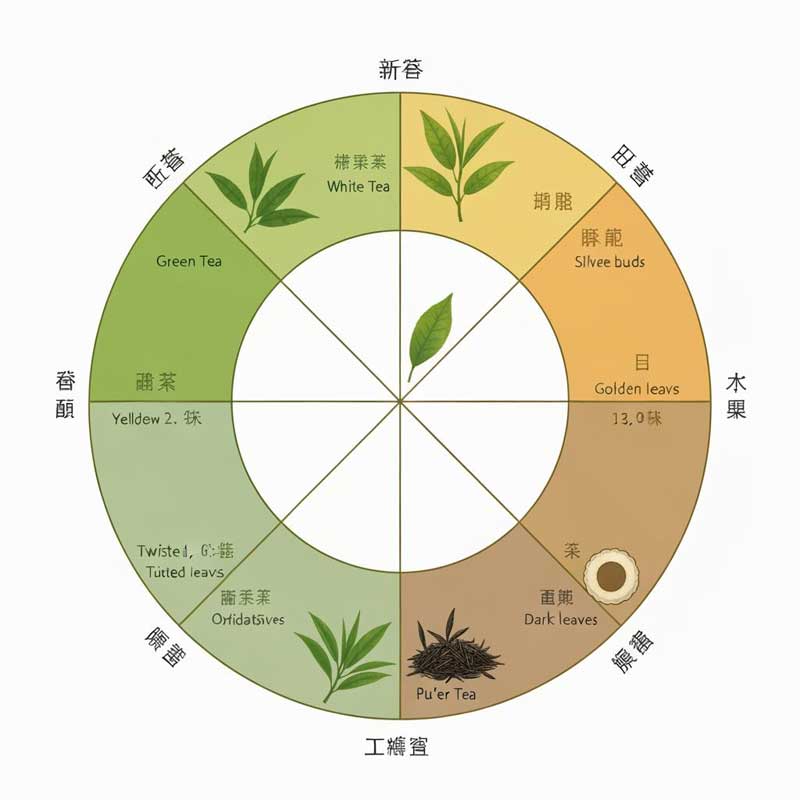
The Six Types of Chinese Tea
All Chinese tea comes from the same plant: Camellia sinensis. The difference lies in how the leaves are processed, particularly their oxidation level.
1. 绿茶 (Lǜchá) – Green Tea
Oxidation: None (0%)
Processing: Leaves are quickly heated (pan-fired or steamed) after picking to prevent oxidation, preserving the green color and fresh flavor.
Characteristics:
- Light, fresh, vegetal flavor
- Pale yellow-green color
- Highest antioxidant content
- Best brewed at 75-80°C (167-176°F)
Famous varieties:
- 龙井 (Lóngjǐng) – West Lake Dragon Well (Hangzhou): flat, pan-roasted leaves, sweet chestnut flavor
- 碧螺春 (Bìluóchūn) – Green Snail Spring (Suzhou): spiral-shaped leaves, fruity aroma
- 毛峰 (Máofēng) – Hairy Peak (Huangshan): delicate, slightly sweet
TCM properties: Cooling, clears heat, aids digestion
2. 白茶 (Báichá) – White Tea
Oxidation: Minimal (5-10%)
Processing: Simply withered and dried with minimal processing, using only young buds and leaves covered in white “hairs"
Characteristics:
- Delicate, subtle, slightly sweet
- Pale yellow color
- Gentle, mellow taste
- Can age like wine
- Best brewed at 85°C (185°F)
Famous varieties:
- 白毫银针 (Báiháo Yínzhēn) – Silver Needle: only buds, most prized white tea
- 白牡丹 (Bái Mǔdān) – White Peony: buds and young leaves
TCM properties: Cooling, detoxifying, anti-inflammatory
3. 黄茶 (Huángchá) – Yellow Tea
Oxidation: Slight (10-20%)
Processing: Similar to green tea but with an extra “yellowing" step where damp leaves are gently heated
Characteristics:
- Mellower than green tea
- Slightly sweet, less grassy
- Golden yellow color
- Rare and expensive
- Best brewed at 80-85°C (176-185°F)
Famous variety:
- 君山银针 (Jūnshān Yínzhēn) – Junshan Silver Needle
TCM properties: Warming, aids digestion
4. 乌龙茶 (Wūlóngchá) – Oolong Tea
Oxidation: Partial (20-80%)
Processing: Partially oxidized through a complex process of withering, rolling, and oxidizing, then heat-treated to stop oxidation
Characteristics:
- Complex flavor between green and black tea
- Can be floral, fruity, creamy, or roasted
- Golden to amber color
- Can be steeped multiple times
- Best brewed at 90-95°C (194-203°F)
Famous varieties:
- 铁观音 (Tiěguānyīn) – Iron Goddess (Fujian): floral, creamy, orchid notes
- 大红袍 (Dàhóngpáo) – Big Red Robe (Wuyi Mountains): roasted, mineral, complex
- 凤凰单丛 (Fènghuáng Dāncōng) – Phoenix Single Bush (Guangdong): fruity, aromatic
TCM properties: Neutral, aids fat digestion, weight management
5. 红茶 (Hóngchá) – Black Tea (Red Tea)
Note: Called “red tea" in Chinese because of the reddish color of the brewed tea!
Oxidation: Full (80-100%)
Processing: Fully oxidized leaves, creating bold, robust flavors
Characteristics:
- Strong, malty, sweet flavor
- Deep red-brown color
- Can be enjoyed with milk/sugar (though traditionally drunk plain in China)
- Best brewed at 95-100°C (203-212°F)
Famous varieties:
- 祁门红茶 (Qímén Hóngchá) – Keemun (Anhui): wine-like, floral, one of China's top black teas
- 正山小种 (Zhèngshān Xiǎozhǒng) – Lapsang Souchong (Fujian): smoky, pine flavor
- 滇红 (Diānhóng) – Yunnan Black: malty, sweet, golden tips
TCM properties: Warming, energizing, aids digestion
6. 普洱茶 (Pǔ'ěrchá) – Pu'er Tea
Oxidation: Post-fermented
Processing: Unique fermentation process, can be aged for decades
Two types:
- 生普 (Shēng pǔ) – Raw/Green Pu'er: naturally aged over years/decades
- 熟普 (Shóu pǔ) – Ripe/Cooked Pu'er: artificially fermented for quick aging
Characteristics:
- Earthy, rich, smooth flavor
- Dark reddish-brown color
- Often compressed into cakes, bricks, or balls
- Improves with age (like wine!)
- Best brewed at 95-100°C (203-212°F)
TCM properties: Warming, aids digestion, reduces cholesterol, weight loss
Cultural note: Aged pu'er cakes can be extremely valuable—some vintage cakes sell for thousands of dollars!
Chinese Tea Ceremony: Gongfu Tea (功夫茶)
功夫茶 (Gōngfu Chá) literally means “tea made with skill" or “tea with effort." It's a traditional method of preparing tea that emphasizes precision, mindfulness, and the beauty of the process itself.
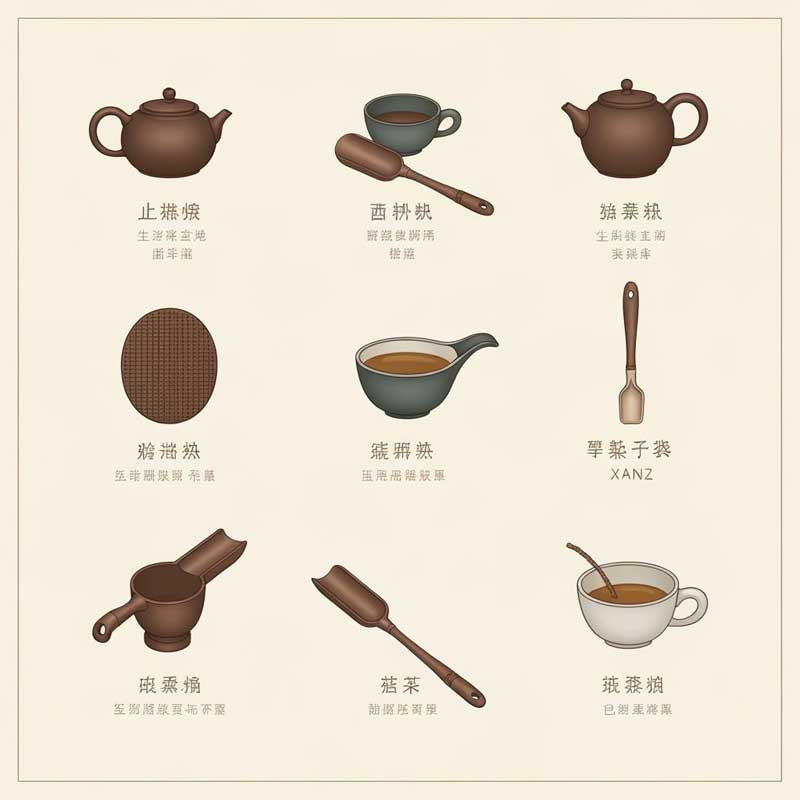
Essential Tea Tools
盖碗 (Gàiwǎn) – Covered Bowl:
- Three-piece porcelain brewing vessel (bowl, lid, saucer)
- Most versatile and widely used
- Allows full control over brewing
紫砂壶 (Zǐshā Hú) – Yixing Teapot:
- Made from special purple clay from Yixing
- Absorbs tea flavor over time (“seasons" the pot)
- Each pot dedicated to one type of tea
- Highly prized by collectors
茶海/公道杯 (Chá Hǎi / Gōngdào Bēi) – Tea Pitcher/Fairness Cup:
- Ensures even strength for all guests
- Named “fairness cup" because it equalizes the tea
茶盘 (Chápán) – Tea Tray:
- Catches overflow water
- Often made of wood, bamboo, or stone
品茗杯 (Pǐnmíng Bēi) – Tasting Cup:
- Small cups for drinking tea
- Usually 20-30ml capacity
闻香杯 (Wénxiāng Bēi) – Smelling Cup:
- Tall, narrow cup for appreciating aroma
- Tea poured from smelling cup into tasting cup
- Mainly used for oolong tea
茶宠 (Chá Chǒng) – Tea Pet:
- Small clay figurines (often animals) kept on tea tray
- “Fed" with tea during ceremony
- Changes color over time from tea exposure
- Brings good luck and adds personality to tea table
The Gongfu Tea Ceremony Steps
Step 1: 赏茶 (Shǎng Chá) – Appreciate the Tea
- Present dry tea leaves to guests
- Observe appearance, smell aroma
- Discuss the tea's origin and qualities
Step 2: 温壶 (Wēn Hú) – Warm the Teapot/Gaiwan
- Pour hot water into teapot and cups
- Swirl and discard water
- Purpose: warm vessels, improve brewing, hygiene
Step 3: 投茶 (Tóu Chá) – Add Tea Leaves
- Place tea leaves in gaiwan/teapot
- Amount varies by tea type (usually 5-8 grams for 100-150ml vessel)
Step 4: 醒茶 (Xǐng Chá) – Awaken/Rinse the Tea
- Pour hot water over leaves
- Immediately discard this first infusion
- Purpose: “wake up" leaves, rinse dust, release initial bitterness
Step 5: 冲泡 (Chōng Pào) – First Steep
- Pour water in circular motion
- Steep for appropriate time (10-30 seconds for first infusion)
- Water temperature varies by tea type
Step 6: 出汤 (Chū Tāng) – Pour the Tea
- Pour all tea from gaiwan/teapot into fairness cup
- Pour from fairness cup into individual tasting cups
- Fill cups in circular motion or continuous back-forth pattern for evenness
Step 7: 闻香 (Wén Xiāng) – Smell the Aroma
- If using smelling cups, pour tea into them first
- Invert tasting cup over smelling cup, then flip
- Smell the empty smelling cup's residual aroma
Step 8: 品茶 (Pǐn Chá) – Taste the Tea
- Observe the tea's color
- Smell the tea in the cup
- Sip slowly in three parts (观, 闻, 品 – observe, smell, taste)
- Notice the aftertaste (回甘, huígān – returning sweetness)
Step 9: 续水 (Xù Shuǐ) – Multiple Infusions
- Quality tea can be steeped 5-10+ times
- Increase steeping time slightly with each infusion
- Notice how flavor evolves with each steep
Chinese Tea Etiquette
When Receiving Tea
The Finger Tap Thank You (叩指礼, Kòuzhǐ Lǐ):
When someone pours tea for you, tap your index and middle finger together on the table twice (or three times). This silent “thank you" gesture comes from a legend about a Qing Dynasty emperor who poured tea for his servant in disguise. The servant couldn't bow without revealing the emperor's identity, so he used his fingers to bow instead!
Variations:
- Younger person to elder: Bend all five fingers and tap (represents kneeling bow)
- Between equals: Index and middle finger together (casual bow)
- Elder to younger: One finger tap (acknowledgment)
When Serving Tea
Do:
- Fill guest's cup before your own
- Fill cups to 70% (七分茶, qī fēn chá – “seven-tenths tea")
- Serve with two hands as a sign of respect
- Refill cups frequently
- Serve elders and important guests first
Don't:
- Fill cups completely (means “you're not welcome to stay long")
- Let guest's cup stay empty (shows inattentiveness)
- Pour with one hand when serving superiors (too casual)
- Point the teapot spout directly at people (considered rude)
Cultural Meanings
Serving tea shows:
- Respect – Offering tea to elders, teachers, guests
- Apology – Tea can be served to ask forgiveness
- Gratitude – Children serve tea to parents at weddings
- Connection – “来,喝茶" (Lái, hē chá – Come, drink tea) means “Let's talk"
茶道 (Chá Dào) – The Way of Tea principles:
- 和 (Hé) – Harmony
- 敬 (Jìng) – Respect
- 清 (Qīng) – Purity
- 寂 (Jì) – Tranquility
Tea in Chinese Social Life
Morning Tea Culture (早茶, Zǎochá)
Especially popular in Guangdong (Canton) and Hong Kong, “yum cha" (饮茶, yǐnchá – drink tea) is a social tradition where families gather at tea houses for tea and dim sum.
Typical scene: Multiple generations, newspapers, chatting, ordering endless rounds of dim sum, pot of tea constantly refilled
Business Tea Culture
In business settings, tea serves multiple purposes:
- Opening gesture: Offering tea welcomes guests
- Discussion medium: Tea keeps the atmosphere relaxed
- Closing signal: When the host stops pouring tea, the meeting is over
Tea as Apology (赔罪茶, Péizuì Chá)
Serving tea can be a formal apology. The person at fault serves tea to the offended party while expressing regret.
Wedding Tea Ceremony (敬茶, Jìng Chá)
During Chinese weddings, the bride and groom serve tea to their parents and elders, kneeling while presenting cups with both hands. This shows respect and officially welcomes them into the family.
In return, elders give red envelopes and jewelry as blessings.
Health Benefits of Chinese Tea (From TCM Perspective)
General Benefits (All Teas)
- Antioxidants (especially catechins in green tea)
- Boosts metabolism and aids weight management
- Improves mental clarity and focus
- Supports cardiovascular health
- Anti-inflammatory properties
- Digestive aid
According to Traditional Chinese Medicine
Green Tea – Best for:
- Clearing heat and toxins
- Summer consumption
- People with “heat" constitutions
- Mental alertness
White Tea – Best for:
- Gentle detoxification
- Cooling without being too cold
- Delicate constitutions
- Anti-aging
Oolong Tea – Best for:
- Weight management
- Balancing body (neutral temperature)
- After rich/oily meals
- Year-round drinking
Black Tea – Best for:
- Warming the body
- Winter consumption
- People with “cold" constitutions
- Energy boost
Pu'er Tea – Best for:
- Digesting heavy, fatty foods
- Lowering cholesterol
- Weight loss
- Improving gut health
TCM Cautions
- Don't drink tea on empty stomach (especially green tea)
- Avoid drinking tea with medicine
- Don't drink tea too late at night
- Pregnant women should limit tea intake
- Match tea type to your constitution and season
How to Brew Chinese Tea Properly
Water Quality & Temperature
Water matters! Chinese tea masters say: “水为茶之母" (Shuǐ wéi chá zhī mǔ) – “Water is the mother of tea"
Best water:
- Spring water or filtered water
- Avoid distilled or hard water
- Fresh water (not re-boiled)
Temperature guide:
- Green/Yellow Tea: 75-80°C (167-176°F)
- White Tea: 85°C (185°F)
- Oolong Tea: 90-95°C (194-203°F)
- Black/Pu'er Tea: 95-100°C (203-212°F)
Tea-to-Water Ratio
Gongfu style (small vessel):
- 5-8 grams tea per 100-150ml water
- Multiple short infusions
Western style (large vessel):
- 2-3 grams tea per 200-250ml water
- One longer infusion
Steeping Times (Gongfu Style)
| Tea Type | 1st Infusion | 2nd-4th | 5th+ |
|---|---|---|---|
| Green Tea | 10-20 sec | 15-30 sec | 30-60 sec |
| White Tea | 20-30 sec | 30-45 sec | 45-90 sec |
| Oolong Tea | 20-40 sec | 30-60 sec | 60-120 sec |
| Black Tea | 10-20 sec | 20-40 sec | 40-90 sec |
| Pu'er Tea | 10-20 sec | 20-40 sec | 40-120 sec |
Pro tip: These are starting points. Adjust based on your taste preference!
Common Mistakes to Avoid
- Using boiling water for all teas – Delicate teas become bitter!
- Steeping too long – Results in bitter, astringent tea
- Using too much tea – Overpowering and wasteful
- Throwing away leaves after one steep – Good tea can steep 5-10 times!
- Not rinsing the tea – First steep should be discarded to remove dust and wake leaves
- Storing tea improperly – Keep in airtight containers away from light, moisture, and strong odors
- Drinking tea that's too hot – Can damage throat and esophagus; let it cool slightly
- Adding milk/sugar to all teas – Most Chinese teas are drunk plain to appreciate their natural flavors
Where to Experience Chinese Tea Culture
In China
Traditional Tea Houses (茶楼, Chálóu):
- Beijing: Lao She Teahouse, Maliandao Tea Street
- Hangzhou: Tea plantations around West Lake, Dragon Well Tea Museum
- Chengdu: People's Park tea houses
- Guangzhou: Traditional Cantonese tea houses for yum cha
- Shanghai: Huxinting Teahouse (Yu Garden)
Tea Markets:
- Beijing Maliandao Tea Market
- Guangzhou Fangcun Tea Market
- Shanghai Tianshan Tea Market
Tea Growing Regions to Visit:
- Hangzhou (Zhejiang): West Lake Longjing tea plantations
- Wuyi Mountains (Fujian): Oolong tea country
- Yunnan: Pu'er tea origins, ancient tea trees
- Anxi (Fujian): Tieguanyin oolong tea
Outside China
- Traditional Chinese tea shops in Chinatowns
- Specialty tea shops focusing on Chinese tea
- Online tea vendors specializing in authentic Chinese tea
Tea Vocabulary for Learners
| Chinese | Pinyin | English |
|---|---|---|
| 茶 | chá | tea |
| 茶道 | chádào | tea ceremony/way of tea |
| 功夫茶 | gōngfu chá | gongfu tea ceremony |
| 喝茶 | hē chá | drink tea |
| 泡茶 | pào chá | brew/make tea |
| 品茶 | pǐn chá | taste/appreciate tea |
| 茶叶 | cháyè | tea leaves |
| 茶壶 | cháhú | teapot |
| 茶杯 | chábēi | teacup |
| 盖碗 | gàiwǎn | covered bowl |
| 茶艺 | cháyì | tea art |
| 回甘 | huígān | returning sweetness (aftertaste) |
| 醒茶 | xǐng chá | awaken/rinse tea |
Famous Chinese Tea Quotes & Sayings
“茶禅一味" (Chá chán yī wèi)
“Tea and Zen are one flavor" – Reflects the spiritual connection between tea and meditation
“琴棋书画诗酒茶" (Qín qí shū huà shī jiǔ chá)
“Music, chess, calligraphy, painting, poetry, wine, and tea" – The seven refined arts of Chinese scholars
“君子之交淡如水" (Jūnzǐ zhī jiāo dàn rú shuǐ)
“The friendship between gentlemen is as bland as water [tea]" – True friendship is simple and pure, like tea
“一日无茶则滞,三日无茶则病" (Yī rì wú chá zé zhì, sān rì wú chá zé bìng)
“One day without tea, stagnation; three days without tea, sickness" – Old saying emphasizing tea's importance
Start Your Tea Journey!
Chinese tea culture is vast, profound, and endlessly fascinating. Whether you're drawn to the meditative ritual of gongfu tea ceremony, the health benefits of different teas, or simply enjoy a good cup of tea, understanding the cultural context deepens your appreciation!
Beginner recommendations:
- Start with Longjing green tea or Tieguanyin oolong
- Buy a simple gaiwan (cheap and versatile)
- Practice the basic gongfu tea steps
- Experiment with water temperature and steeping times
- Keep a tea journal to note your preferences
Remember: Tea culture in China is about presence, respect, and connection—not perfection. The most important thing is to slow down, be present, and enjoy the process!
来,喝茶!(Lái, hē chá!) – Come, drink tea! ☕🍵
🎓 Learn Cultural Chinese Through Tea Conversations!
Want to discuss Chinese tea culture in Mandarin? Imagine confidently ordering tea in a Chinese tea house, understanding menu descriptions, or having deep conversations about tea traditions with native speakers!
I'm Candice, and I help students:
- ✅ Master cultural vocabulary in natural context
- ✅ Understand nuanced cultural concepts through language
- ✅ Practice real-life conversational scenarios
- ✅ Build confidence in cultural situations
👉 Ready to explore Chinese culture through language? Discover my culturally-immersive Mandarin lessons designed around your interests!
Curious about cultural learning methods? Learn about my teaching approach that connects language with authentic cultural experiences.
Explore lesson packages: Find the right learning plan for your schedule and goals.
Have questions about Chinese tea or want to start learning? Get in touch today and let's talk about how culture can accelerate your Chinese learning journey!
Ready to start your own Chinese New Year traditions? Read our complete guide to Chinese New Year and discover more fascinating cultural celebrations!
What's your favorite type of Chinese tea? Have you tried a gongfu tea ceremony? Share your tea experiences in the comments!