Chinese particles (助词 zhùcí) are small but mighty! These little words appear at the end of sentences or between words, adding meaning, emotion, and grammatical function. They’re essential for natural-sounding Chinese, yet they often confuse learners because English doesn’t have direct equivalents.
Don’t worry—this guide breaks down the most important Chinese particles with clear explanations and lots of examples!
What Are Chinese Particles?
Particles are function words that don’t have concrete meanings on their own. Instead, they:
- Turn statements into questions
- Show whether an action is completed
- Express the speaker’s attitude or emotion
- Connect words and show grammatical relationships
Think of particles as the “glue” that holds Chinese sentences together and adds subtle nuances.
Before diving into particles, make sure you understand basic sentence structure. Check out my guide to Chinese sentence structure for a foundation.
Question Particles (疑问助词)
1. 吗 (ma) – Yes/No Questions
Function: Turns any statement into a yes/no question
Formula: Statement + 吗?
Examples:
| Statement | Question with 吗 | Translation |
|---|---|---|
| 你是学生。 | 你是学生吗? | Are you a student? |
| 他喜欢咖啡。 | 他喜欢咖啡吗? | Does he like coffee? |
| 你会说中文。 | 你会说中文吗? | Can you speak Chinese? |
Pro Tip: 吗 is the easiest way to make questions in Chinese—just add it to the end!
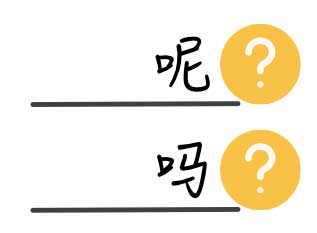
2. 呢 (ne) – Multiple Uses
Use 1: Follow-up questions (And what about…?)
Examples:
- 我很好,你呢?(I’m fine, and you?)
- 这个是我的,那个呢?(This is mine, what about that one?)
Use 2: Questions about ongoing states/locations
- 他在哪儿呢?(Where is he?)
- 你在做什么呢?(What are you doing?)
Use 3: Softening statements or questions
- 这个问题很简单呢!(This question is quite simple!)
3. 吧 (ba) – Suggestions & Softened Questions
Use 1: Suggestions (Let’s… / Why don’t we…)
- 我们走吧!(Let’s go!)
- 吃饭吧!(Let’s eat!)
Use 2: Softened questions/assumptions
- 你是中国人吧?(You’re Chinese, right?)
- 应该没问题吧?(It should be fine, right?)
Use 3: Mild commands
- 快点吧!(Hurry up!)
- 坐下吧。(Please sit down.)
Aspect Particles (时态助词)
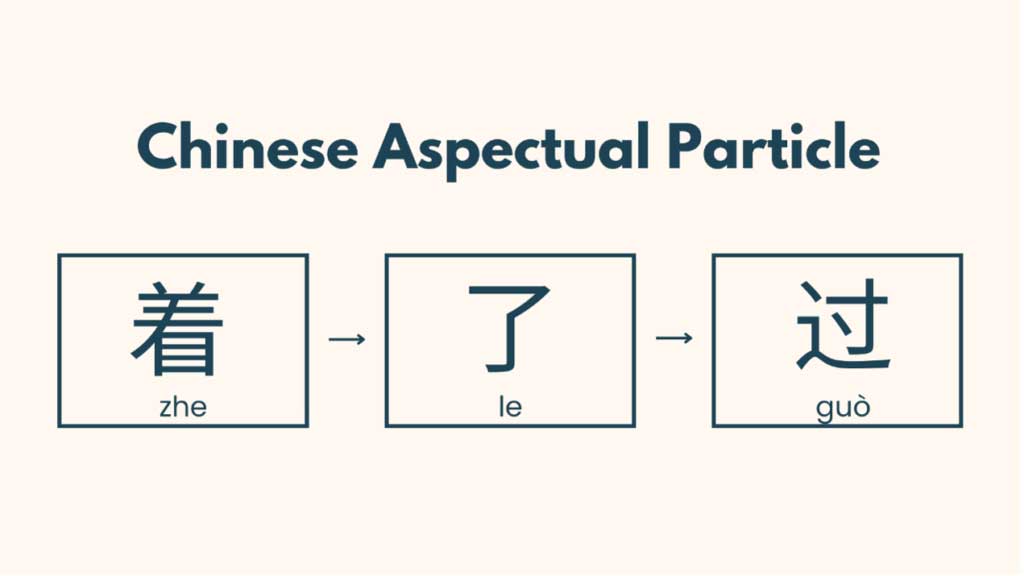
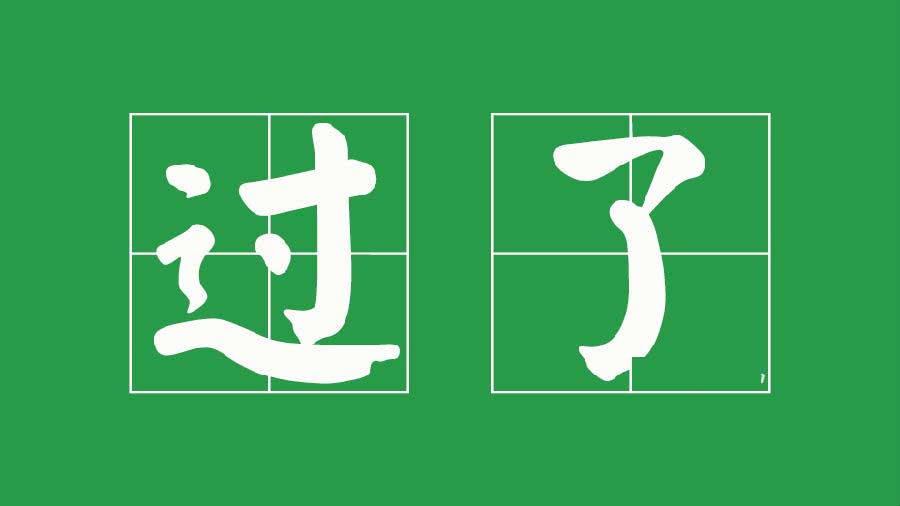
4. 了 (le) – Completed Action or Change of State
This is one of the most important and complex particles in Chinese!
Use 1: Completed action (了₁ after the verb)
Examples:
- 我吃了饭。(I ate / have eaten.)
- 他买了一本书。(He bought a book.)
- 她去了北京。(She went to Beijing.)
Use 2: Change of state (了₂ at the end of sentence)
- 天冷了。(It’s gotten cold.)
- 我饿了。(I’m hungry now.)
- 她是老师了。(She’s a teacher now.)
Use 3: Both together for emphasis
- 我吃了饭了。(I’ve eaten already.)
- 他走了三个小时了。(He’s been walking for three hours.)
Common Mistake: 了 does NOT equal past tense! Chinese doesn’t have tense like English.
| Wrong ❌ | Right ✅ |
|---|---|
| 我昨天吃了饭。 (sounds incomplete) | 我昨天吃饭了。 (I ate yesterday.) |
| 我以前住在北京了。 (sounds like recent change) | 我以前住在北京。 (I used to live in Beijing.) |
5. 过 (guo) – Past Experience
Function: Indicates someone has had an experience at some point in the past
Formula: Subject + Verb + 过 + Object
Examples:
- 我去过中国。(I’ve been to China before.)
- 你吃过北京烤鸭吗?(Have you ever eaten Peking duck?)
- 他学过法语。(He studied French before.)
Difference from 了:
- 了 = completed action (specific time/instance)
- 过 = life experience (at some point, not specific when)
| 了 (specific completion) | 过 (experience) |
|---|---|
| 我去了中国。 (I went to China [recently/specific trip]) | 我去过中国。 (I’ve been to China [at some point]) |
6. 着 (zhe) – Ongoing State/Action
Function: Shows an action is in progress or a state is maintained
Examples:
- 门开着。(The door is open.)
- 他穿着红色的衣服。(He’s wearing red clothes.)
- 墙上挂着一幅画。(A painting is hanging on the wall.)
Common Use: Describing background actions while doing something else
- 他站着吃饭。(He’s eating while standing.)
- 我躺着看书。(I’m lying down reading.)
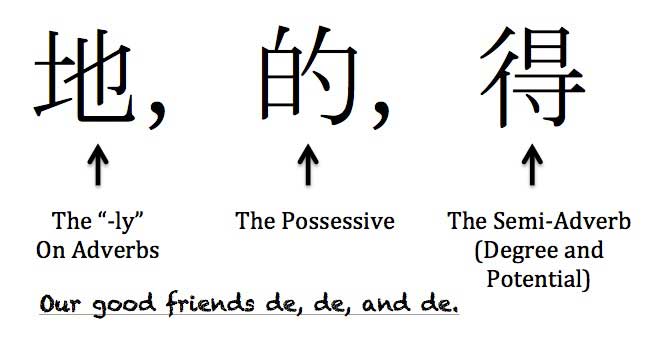
The Famous Trio: 的 (de), 地 (de), 得 (de)
These three particles all sound the same but have completely different functions!
7. 的 (de) – Possessive & Adjective Marker
Use 1: Possession (like ‘s in English)
- 我的书 (my book)
- 老师的办公室 (the teacher’s office)
Use 2: Links adjectives to nouns
- 红色的苹果 (red apple)
- 漂亮的女孩 (beautiful girl)
- 很高兴的人 (very happy person)
Formula: Modifier + 的 + Noun
8. 地 (de) – Adverb Marker
Function: Links adverbs to verbs (describes HOW an action is done)
Formula: Adverb + 地 + Verb
Examples:
- 慢慢地走 (walk slowly)
- 认真地学习 (study seriously)
- 开心地笑 (laugh happily)
- 仔细地看 (look carefully)
9. 得 (de) – Degree Complement Marker
Function: Shows the degree or result of an action (describes how WELL something is done)
Formula: Verb + 得 + Complement
Examples:
- 他跑得很快。(He runs very fast.)
- 她说得很好。(She speaks very well.)
- 我累得不想动。(I’m so tired I don’t want to move.)
- 笑得肚子疼 (laugh until stomach hurts)
Quick Comparison: 的 vs 地 vs 得
| Particle | Position | Example | Translation |
|---|---|---|---|
| 的 | Before NOUN | 漂亮的花 | beautiful flower |
| 地 | Before VERB | 慢慢地走 | walk slowly |
| 得 | After VERB | 跑得快 | run fast |
Memory Trick:
- 的 – “white spoon” (白勺) – describes things (nouns)
- 地 – “earth radical” (土) – stands firmly before actions
- 得 – “double person” (彳) – shows result of action
Other Essential Particles
10. 啊 (a/wa/ya/na) – Tone Softener
Function: Makes statements softer, friendlier, or more enthusiastic
Examples:
- 真好啊!(That’s really good!)
- 是啊!(Yes, indeed!)
- 走啊!(Let’s go!)
Note: Pronunciation changes based on previous sound (a, wa, ya, or na)
11. 也 (yě) – Also/Too
Position: Before the verb (NOT at the end like English “too”)
Examples:
- 我也喜欢。(I like it too.)
- 他也是学生。(He’s also a student.)
- 我也想去。(I want to go too.)
Common Mistake:
- ❌ 我喜欢也
- ✅ 我也喜欢
12. 都 (dōu) – All/Both
Position: Before the verb
Examples:
- 我们都是学生。(We are all students.)
- 他们都去了。(They all went.)
- 我都知道。(I know everything.)
Note: 都 emphasizes “all” of the subjects mentioned before it
Combining Particles
Particles can be used together! Here are common combinations:
了 + 吗
- 你吃了吗?(Have you eaten? / Did you eat?)
- 他走了吗?(Has he left?)
了 + 呢
- 我还没吃饭呢!(I still haven’t eaten yet!)
- 他在睡觉呢。(He’s sleeping.)
了 + 吧
- 走了吧!(Let’s go already!)
- 应该到了吧?(Should have arrived by now, right?)
Common Mistakes with Particles
❌ Mistake #1: Using 吗 with Question Words
Wrong: 你叫什么吗?
Right: 你叫什么?
Don’t use 吗 when you already have a question word (什么, 哪儿, 谁, etc.)
❌ Mistake #2: Forgetting 了 for Completed Actions
Wrong: 我吃早饭。(sounds like habitual)
Right: 我吃了早饭。(I ate breakfast.)
❌ Mistake #3: Mixing Up 的/地/得
Wrong: 他跑地很快。
Right: 他跑得很快。
Wrong: 慢慢得走
Right: 慢慢地走
❌ Mistake #4: Overusing 了
Not every past action needs 了!
- ❌ 我昨天去了学校了学了中文了。(Too many 了!)
- ✅ 我昨天去学校学了中文。(I went to school yesterday and studied Chinese.)
Practice Exercises
Exercise 1: Choose the Correct Particle
- 你是学生____?(make yes/no question)
- 我去____北京。(past experience)
- 红色____苹果 (red apple)
- 他说____很好。(speaks very well)
- 我们走____!(suggestion: let’s go)
Answers:
- 你是学生吗?
- 我去过北京。
- 红色的苹果
- 他说得很好。
- 我们走吧!
Exercise 2: 的/地/得 – Fill in the Blanks
- 慢慢____ 走
- 我____ 书
- 跑____ 快
- 漂亮____ 花
- 认真____ 学习
Answers:
- 慢慢地走
- 我的书
- 跑得快
- 漂亮的花
- 认真地学习
Particle Learning Strategy
Don’t try to memorize all particles at once! Instead:
- Week 1-2: Master question particles (吗, 呢, 吧)
- Week 3-4: Focus on 了 and 过
- Week 5-6: Practice 的/地/得
- Ongoing: Use particles in daily conversations
Best Practice Method: Learn particles through example sentences, not isolated rules. Create your own sentences using each particle!
Want to improve your overall grammar foundation? Check out my complete guide to Chinese measure words next!
Quick Reference Chart
| Particle | Function | Example |
|---|---|---|
| 吗 (ma) | Yes/no question | 你好吗? |
| 呢 (ne) | Follow-up/ongoing | 你呢? |
| 吧 (ba) | Suggestion | 走吧! |
| 了 (le) | Completion/change | 我吃了。 |
| 过 (guo) | Past experience | 我去过。 |
| 着 (zhe) | Ongoing state | 门开着。 |
| 的 (de) | Modify noun | 红的苹果 |
| 地 (de) | Modify verb | 慢慢地走 |
| 得 (de) | Degree/result | 跑得快 |
What to Learn Next
Now that you understand particles, here’s your next steps:
- Practice using particles in full conversations
- Pay attention to particles in Chinese media
- Study more complex grammar patterns
- Work on natural sentence flow with particles
Remember: Particles are the secret to sounding natural in Chinese. Native speakers use them instinctively—with practice, you will too! 🎯
🚀 Master Chinese Particles with Expert Guidance
Understanding particles intellectually is one thing—using them naturally in conversation is another! That’s where personalized instruction makes all the difference.
I’m Candice, and I specialize in helping students:
- ✅ Use particles instinctively in real conversations
- ✅ Understand subtle differences between similar particles
- ✅ Get immediate feedback on particle usage
- ✅ Transform from textbook Chinese to natural fluency
👉 Ready to master Chinese particles through immersive practice? Discover my structured Mandarin lessons that focus on practical, conversational skills.
Curious about my teaching philosophy? Learn more about my background and see how I help students achieve fluency faster.
Looking for flexible learning options? Explore my lesson packages and find the one that fits your goals and schedule.
Questions about particles or ready to get started? Contact me today and let’s discuss how I can help you master Chinese grammar naturally!
Which particle do you find most challenging? Share your struggles in the comments!