Chinese Measure Words: Complete Guide with Examples
Key Takeaway:
Master Chinese measure words (量词) with this beginner-friendly guide. Learn the 20 most common classifiers, understand the logic behind them, and practice with real examples.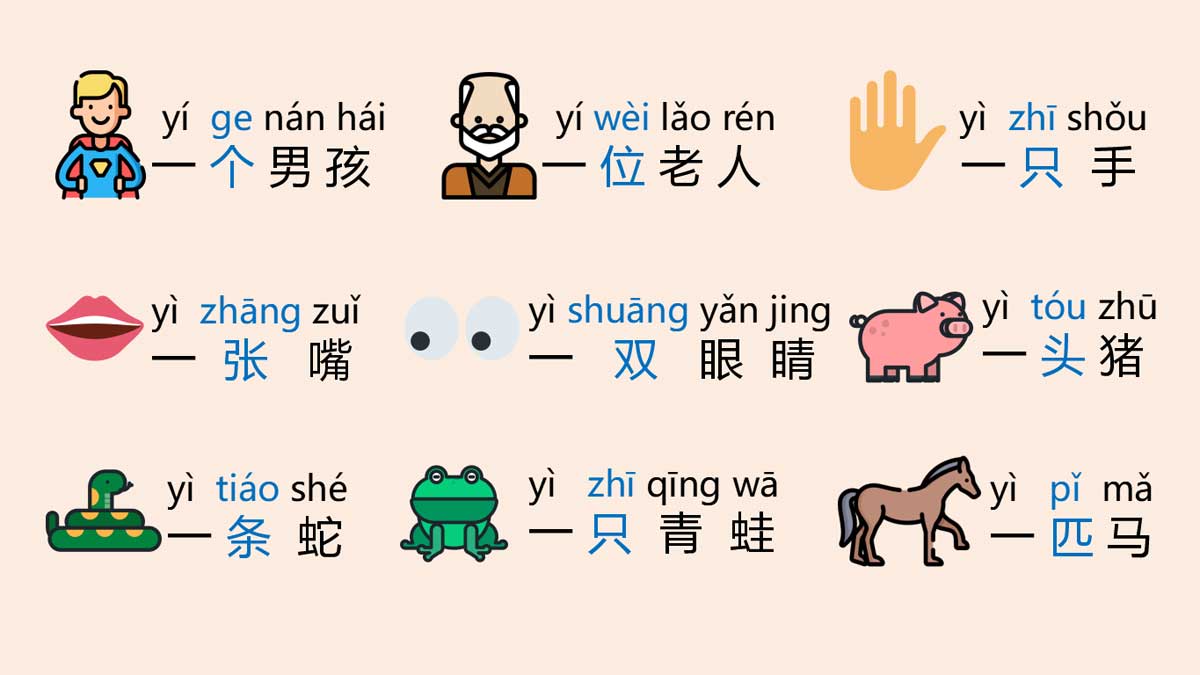
One of the trickiest parts of Chinese grammar is measure words (量词 liàngcí)—also called classifiers. Unlike English, you can't just say “one book" or “three cats" in Chinese. You need to insert a specific word between the number and the noun.
The good news? There's logic behind measure words, and once you understand the patterns, they become much easier!
What Are Chinese Measure Words?
In English, we say:
- One book
- Two cats
- Three cups of coffee
In Chinese, you must use a measure word:
| Wrong ❌ | Right ✅ | Translation |
|---|---|---|
| 一书 | 一本书 | One book |
| 两猫 | 两只猫 | Two cats |
| 三咖啡 | 三杯咖啡 | Three cups of coffee |
The pattern is always: Number + Measure Word + Noun
Before we dive deeper, make sure you have a solid foundation in basic grammar. Check out my guide to Chinese sentence structure if you need a refresher.
Why Does Chinese Use Measure Words?
Measure words categorize nouns by their characteristics:
- Shape: 条 for long, thin things
- Size: 头 for large animals
- Function: 把 for things with handles
- Container: 杯 for cups, 瓶 for bottles
Think of measure words as noun categories. They help organize Chinese vocabulary logically.
The 20 Most Common Chinese Measure Words
1. 个 (gè) – The Universal Classifier
Use for: People, general objects, abstract concepts
Examples:
- 一个人 (yī gè rén) – one person
- 三个苹果 (sān gè píngguǒ) – three apples
- 两个问题 (liǎng gè wèntí) – two questions
- 一个月 (yī gè yuè) – one month
Pro Tip: When in doubt, use 个! It works for most nouns.

2. 本 (běn) – For Bound Items
Use for: Books, magazines, notebooks
Examples:
- 一本书 (yī běn shū) – one book
- 两本杂志 (liǎng běn zázhì) – two magazines
- 三本笔记本 (sān běn bǐjìběn) – three notebooks
3. 只 (zhī) – For Small Animals & Certain Objects
Use for: Small animals, birds, hands, boats
Examples:
- 一只猫 (yī zhī māo) – one cat
- 两只狗 (liǎng zhī gǒu) – two dogs
- 三只鸟 (sān zhī niǎo) – three birds
- 一只手 (yī zhī shǒu) – one hand
4. 条 (tiáo) – For Long, Thin Things
Use for: Rivers, snakes, fish, pants, roads, news
Examples:
- 一条河 (yī tiáo hé) – one river
- 两条鱼 (liǎng tiáo yú) – two fish
- 三条裤子 (sān tiáo kùzi) – three pairs of pants
- 一条新闻 (yī tiáo xīnwén) – one piece of news
5. 张 (zhāng) – For Flat Things
Use for: Paper, tables, beds, photos, cards
Examples:
- 一张纸 (yī zhāng zhǐ) – one piece of paper
- 两张桌子 (liǎng zhāng zhuōzi) – two tables
- 三张照片 (sān zhāng zhàopiàn) – three photos
- 一张床 (yī zhāng chuáng) – one bed
6. 杯 (bēi) – For Cups/Glasses
Use for: Beverages in cups or glasses
Examples:
- 一杯咖啡 (yī bēi kāfēi) – one cup of coffee
- 两杯茶 (liǎng bēi chá) – two cups of tea
- 三杯水 (sān bēi shuǐ) – three glasses of water
7. 瓶 (píng) – For Bottles
Use for: Bottled items
Examples:
- 一瓶水 (yī píng shuǐ) – one bottle of water
- 两瓶啤酒 (liǎng píng píjiǔ) – two bottles of beer
- 三瓶可乐 (sān píng kělè) – three bottles of cola
8. 件 (jiàn) – For Clothing (Upper Body) & Matters
Use for: Shirts, jackets, coats, matters/affairs
Examples:
- 一件衣服 (yī jiàn yīfu) – one piece of clothing
- 两件T恤 (liǎng jiàn T-xù) – two T-shirts
- 三件事 (sān jiàn shì) – three matters
9. 双 (shuāng) – For Pairs
Use for: Shoes, socks, chopsticks, hands
Examples:
- 一双鞋 (yī shuāng xié) – one pair of shoes
- 两双袜子 (liǎng shuāng wàzi) – two pairs of socks
- 一双筷子 (yī shuāng kuàizi) – one pair of chopsticks
10. 把 (bǎ) – For Things with Handles
Use for: Chairs, umbrellas, knives
Examples:
- 一把椅子 (yī bǎ yǐzi) – one chair
- 两把伞 (liǎng bǎ sǎn) – two umbrellas
- 三把刀 (sān bǎ dāo) – three knives
11. 辆 (liàng) – For Vehicles
Use for: Cars, bicycles, buses
Examples:
- 一辆车 (yī liàng chē) – one car
- 两辆自行车 (liǎng liàng zìxíngchē) – two bicycles
- 三辆公交车 (sān liàng gōngjiāo chē) – three buses
12. 架 (jià) – For Planes & Machines
Use for: Airplanes, pianos, cameras
Examples:
- 一架飞机 (yī jià fēijī) – one airplane
- 两架钢琴 (liǎng jià gāngqín) – two pianos
- 三架照相机 (sān jià zhàoxiàngjī) – three cameras
13. 座 (zuò) – For Buildings & Mountains
Use for: Buildings, bridges, mountains
Examples:
- 一座山 (yī zuò shān) – one mountain
- 两座桥 (liǎng zuò qiáo) – two bridges
- 三座房子 (sān zuò fángzi) – three houses
14. 头 (tóu) – For Large Animals
Use for: Cattle, elephants, pigs
Examples:
- 一头牛 (yī tóu niú) – one cow
- 两头大象 (liǎng tóu dàxiàng) – two elephants
- 三头猪 (sān tóu zhū) – three pigs
15. 匹 (pǐ) – For Horses
Use for: Horses (mainly)
Examples:
- 一匹马 (yī pǐ mǎ) – one horse
- 两匹马 (liǎng pǐ mǎ) – two horses
16. 颗 (kē) – For Small, Round Things
Use for: Hearts, teeth, pearls, stars
Examples:
- 一颗心 (yī kē xīn) – one heart
- 两颗牙 (liǎng kē yá) – two teeth
- 三颗星星 (sān kē xīngxing) – three stars
17. 块 (kuài) – For Chunks/Pieces
Use for: Cake, soap, stone, land, money (yuan)
Examples:
- 一块蛋糕 (yī kuài dàngāo) – one piece of cake
- 两块钱 (liǎng kuài qián) – two yuan
- 三块石头 (sān kuài shítou) – three stones
18. 层 (céng) – For Layers/Floors
Use for: Building floors, layers
Examples:
- 一层楼 (yī céng lóu) – one floor
- 两层蛋糕 (liǎng céng dàngāo) – two-layer cake
19. 口 (kǒu) – For Family Members & Wells
Use for: Family members (when counting), wells, pigs
Examples:
- 一口人 (yī kǒu rén) – one family member
- 三口之家 (sān kǒu zhī jiā) – family of three
- 一口井 (yī kǒu jǐng) – one well
20. 位 (wèi) – For People (Polite)
Use for: People (respectful/formal)
Examples:
- 一位老师 (yī wèi lǎoshī) – one teacher
- 两位客人 (liǎng wèi kèrén) – two guests
- 三位先生 (sān wèi xiānsheng) – three gentlemen
How to Remember Measure Words
Strategy 1: Learn by Category
Group measure words by what they describe:
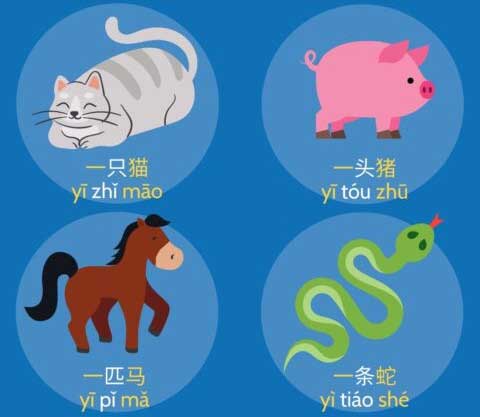
- Animals: 只 (small), 头 (large), 匹 (horses)
- Containers: 杯 (cup), 瓶 (bottle), 碗 (bowl)
- Vehicles: 辆 (cars), 架 (planes)
- Buildings: 座 (buildings), 层 (floors)
Strategy 2: Focus on Shape
- Long & thin: 条 (river, fish, pants)
- Flat: 张 (paper, table, bed)
- Round: 颗 (pearls, hearts)
- Chunks: 块 (cake, soap)
Strategy 3: Create Mental Images
For example:
- 本 = Books with bending spines
- 把 = Things you can grab (handles)
- 条 = Things that look like a strip
Want to improve your overall vocabulary? Check out my guide on essential Chinese words for beginners.
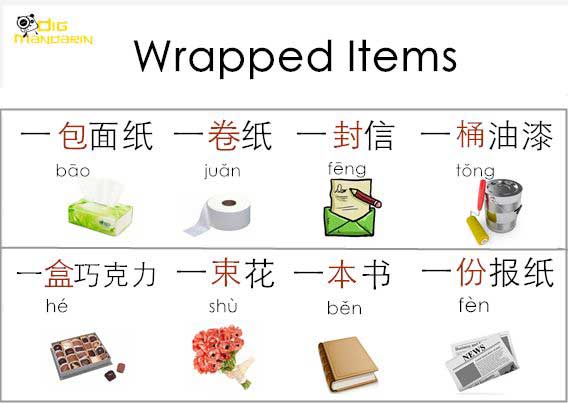
Common Mistakes to Avoid
❌ Mistake #1: Forgetting the Measure Word
Wrong: 我有三书
Right: 我有三本书
❌ Mistake #2: Using the Wrong Measure Word
Wrong: 一个书 (should be 本 for books)
Right: 一本书
❌ Mistake #3: Confusing 只, 头, and 匹 for Animals
- Small animals: 只 (一只猫)
- Large animals: 头 (一头牛)
- Horses: 匹 (一匹马)
❌ Mistake #4: Using 个 When a Specific Word Exists
While 个 often works, using the specific measure word sounds more natural:
- Acceptable: 一个书 ✓ (but not ideal)
- Better: 一本书 ✅
Practice Exercises
Exercise 1: Choose the Correct Measure Word
- 一____猫 (cat)
- 两____咖啡 (coffee)
- 三____车 (car)
- 一____裤子 (pants)
- 两____人 (people – polite)
Answers:
- 一只猫
- 两杯咖啡
- 三辆车
- 一条裤子
- 两位人
Exercise 2: Translate to Chinese
- One book
- Three chairs
- Two bottles of water
- One airplane
- Four dogs
Answers:
- 一本书
- 三把椅子
- 两瓶水
- 一架飞机
- 四只狗
Quick Reference Chart
| Measure Word | Use For | Example |
|---|---|---|
| 个 (gè) | General items, people | 一个人 (one person) |
| 本 (běn) | Books, magazines | 一本书 (one book) |
| 只 (zhī) | Small animals | 一只猫 (one cat) |
| 条 (tiáo) | Long, thin things | 一条鱼 (one fish) |
| 张 (zhāng) | Flat things | 一张纸 (one paper) |
| 杯 (bēi) | Cups of liquid | 一杯水 (one cup of water) |
| 辆 (liàng) | Vehicles | 一辆车 (one car) |
| 把 (bǎ) | Things with handles | 一把伞 (one umbrella) |
What to Learn Next
Now that you understand measure words, here's what to tackle next:
- Practice using measure words in full sentences
- Learn how to use 这/那 with measure words
- Study more advanced grammar patterns
- Focus on speaking practice to make them automatic
Remember: Don't stress about memorizing every measure word. Start with the top 10, and you'll already understand 80% of common usage! 🎯
🚀 Master Chinese Grammar with Personalized Lessons
Measure words are just one piece of the Chinese grammar puzzle. Want to master them through real conversations and personalized feedback?
I'm Candice, and I help students like you:
- ✅ Use measure words naturally in conversation
- ✅ Get instant correction when you make mistakes
- ✅ Practice with customized exercises
- ✅ Build confidence speaking grammatically correct Chinese
👉 Ready to stop guessing and start speaking correctly? Explore my structured Mandarin lessons designed for learners at every level.
Want to know more about my teaching approach? Learn about my background and methodology and see how I can help you succeed.
Not sure which lesson package is right for you? Browse my flexible pricing options and find the perfect fit for your goals and budget.
Questions about measure words or my lessons? Get in touch today and let's discuss how I can help you master Chinese grammar!
Which measure word do you find most confusing? Share in the comments below!