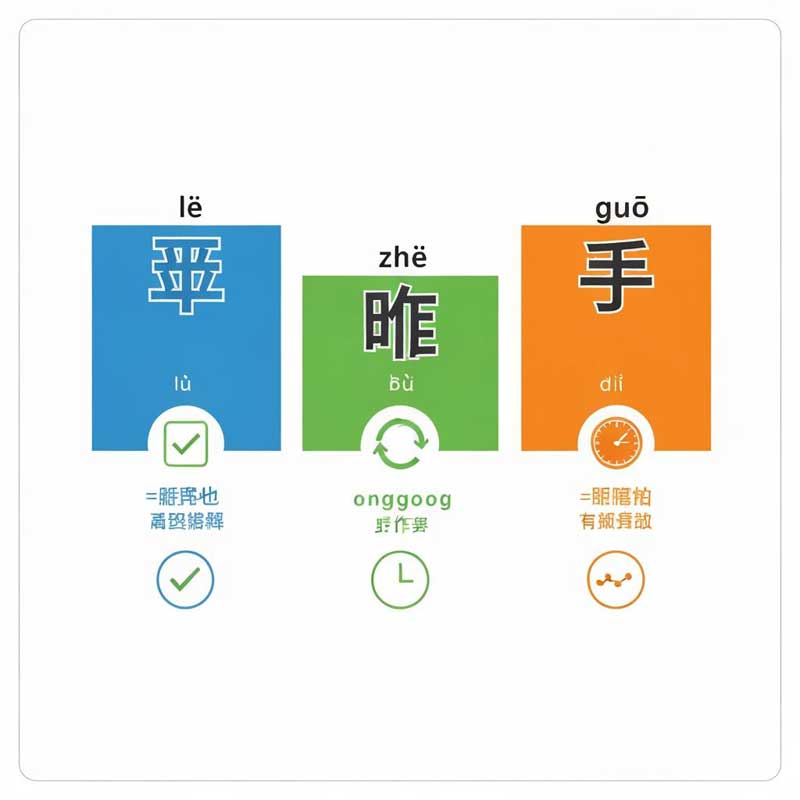
If you’ve been learning Chinese for a while, you’ve probably noticed these tiny words popping up everywhere: 了 (le), 着 (zhe), and 过 (guo).
They look simple, but they’re the #1 grammar challenge for Chinese learners. Why? Because Chinese doesn’t have tenses like English—instead, it uses these particles to show how actions relate to time.
In this guide, I’ll show you exactly when to use each particle with clear rules and real examples. By the end, you’ll know which particle to use—every time.
Why Chinese Particles Matter
Before diving into each particle, let’s understand why they exist.
English changes verbs to show time:
- I eat (present)
- I ate (past)
- I am eating (ongoing)
- I have eaten (experience)
Chinese verbs never change. Instead, you add particles:
- 我吃 (I eat)
- 我吃了 (I ate / completed eating)
- 我吃着 (I’m eating / in the process)
- 我吃过 (I’ve eaten before / have the experience)
Same verb (吃), different meanings!
If you’re still struggling with basic sentence structure, review my Chinese sentence structure guide first.
了 (Le): Completion and Change
了 (le) is the most common particle—and the most confusing because it has TWO different uses.
Use #1: 了 After Verbs (Completion Marker)
Pattern: Verb + 了 + Object
This shows an action is completed.
Examples:
| Chinese | Pinyin | English |
|---|---|---|
| 我吃了饭 | Wǒ chīle fàn | I ate (finished eating) |
| 他买了一本书 | Tā mǎile yì běn shū | He bought a book |
| 我们看了电影 | Wǒmen kànle diànyǐng | We watched a movie |
| 她学了三年中文 | Tā xuéle sān nián zhōngwén | She studied Chinese for 3 years (and stopped) |
Key point: This 了 shows the action is done and finished.
Use #2: 了 at Sentence End (Change of State)
Pattern: Subject + Verb + Object + 了
This shows a new situation or change has occurred.
Examples:
| Chinese | Pinyin | English |
|---|---|---|
| 下雨了 | Xià yǔ le | It’s raining now (it wasn’t before) |
| 我饿了 | Wǒ è le | I’m hungry now (I wasn’t before) |
| 他来了 | Tā lái le | He’s here now (he arrived) |
| 天黑了 | Tiān hēi le | It got dark |
| 我会说中文了 | Wǒ huì shuō zhōngwén le | I can speak Chinese now (I couldn’t before) |
Key point: This 了 announces “something is now true that wasn’t before.”
When to Use BOTH 了’s (Double 了)
Sometimes you need both!
Pattern: Verb + 了 + Object + 了
This means an action was completed AND it’s a new situation.
Examples:
| Chinese | Pinyin | English |
|---|---|---|
| 我吃了饭了 | Wǒ chīle fàn le | I’ve eaten (finished + new state) |
| 他买了车了 | Tā mǎile chē le | He bought a car (owns one now) |
| 我们到了北京了 | Wǒmen dàole Běijīng le | We’ve arrived in Beijing |
Think of it as: First 了 = completed action, Second 了 = new situation
How to Negate 了 Sentences
Use 没 (méi) instead of 不:
| Positive | Negative |
|---|---|
| 我吃了饭 | 我没吃饭 (remove 了!) |
| 他来了 | 他没来 |
| 我买了书 | 我没买书 |
Important: When you use 没, you drop the 了!
着 (Zhe): Ongoing Actions and States
着 (zhe) shows something is in progress or in a continuing state.
Think of it like the -ing form in English.
Use #1: Continuous Actions
Pattern: Verb + 着
Examples:
| Chinese | Pinyin | English |
|---|---|---|
| 他站着 | Tā zhànzhe | He’s standing |
| 门开着 | Mén kāizhe | The door is open |
| 灯亮着 | Dēng liàngzhe | The light is on |
| 她坐着 | Tā zuòzhe | She’s sitting |
Use #2: Simultaneous Actions
Pattern: Verb1 + 着 + Verb2
This shows two actions happening at the same time.
Examples:
| Chinese | Pinyin | English |
|---|---|---|
| 她笑着说 | Tā xiàozhe shuō | She said while smiling |
| 我站着吃饭 | Wǒ zhànzhe chī fàn | I eat while standing |
| 他躺着看书 | Tā tǎngzhe kàn shū | He reads while lying down |
| 我们走着聊天 | Wǒmen zǒuzhe liáotiān | We chat while walking |
Pattern meaning: “While doing [Verb1], also doing [Verb2]”
Use #3: Describing States
Use 着 to describe how something looks or what state it’s in:
Examples:
| Chinese | Pinyin | English |
|---|---|---|
| 墙上挂着一幅画 | Qiáng shàng guàzhe yì fú huà | A painting is hanging on the wall |
| 桌子上放着一本书 | Zhuōzi shàng fàngzhe yì běn shū | A book is (placed) on the table |
| 她穿着红色的衣服 | Tā chuānzhe hóngsè de yīfu | She’s wearing red clothes |
How to Negate 着 Sentences
Use 没 (méi) + Verb + 着:
| Positive | Negative |
|---|---|
| 门开着 | 门没开着 (The door isn’t open) |
| 他站着 | 他没站着 (He’s not standing) |
过 (Guo): Past Experience
过 (guo) means “have done something before” or “have the experience of”.
It’s like English “have been to” or “have tried.”
Expressing “Have Done”
Pattern: Subject + Verb + 过 + Object
Examples:
| Chinese | Pinyin | English |
|---|---|---|
| 我去过中国 | Wǒ qùguo Zhōngguó | I’ve been to China (before) |
| 他吃过北京烤鸭 | Tā chīguo Běijīng kǎoyā | He’s tried Peking duck |
| 我看过这个电影 | Wǒ kànguo zhège diànyǐng | I’ve seen this movie (before) |
| 她学过中文 | Tā xuéguo zhōngwén | She has studied Chinese (before) |
Key point: 过 focuses on whether you have the experience, not when it happened.
Common Patterns with 过:
1. Asking about experience:
你去过中国吗?
Have you been to China?
你吃过日本菜吗?
Have you tried Japanese food?
2. With 从来没 (never):
我从来没去过美国
I’ve never been to America
他从来没吃过这个
He’s never tried this
过 vs 了: What’s the Difference?
This is where learners get confused! Here’s the key difference:
| 了 (le) | 过 (guo) |
|---|---|
| Specific completed action | General past experience |
| 我去了中国 (I went to China – recently, specific trip) | 我去过中国 (I’ve been to China – sometime in my life) |
| 我吃了北京烤鸭 (I ate Peking duck – just now) | 我吃过北京烤鸭 (I’ve tried Peking duck – before) |
| 我看了这个电影 (I watched this movie – finished it) | 我看过这个电影 (I’ve seen this movie – I have the experience) |
Think of it this way:
- 了 = “I did it” (specific action, often recent)
- 过 = “I’ve done it” (have the experience, time not important)
How to Negate 过 Sentences
Use 没 (méi) + Verb + 过:
| Positive | Negative |
|---|---|
| 我去过中国 | 我没去过中国 (keep 过!) |
| 他吃过北京烤鸭 | 他没吃过北京烤鸭 |
Important: Unlike 了, you keep the 过 when negating!
Quick Comparison: 了 vs 着 vs 过
| Particle | Meaning | When to Use | Example |
|---|---|---|---|
| 了 | Completion / Change | Action is finished OR new situation | 我吃了饭 (I ate) 下雨了 (It’s raining now) |
| 着 | Ongoing / State | Action in progress OR current state | 他站着 (He’s standing) 门开着 (Door is open) |
| 过 | Experience | “Have done” / “have the experience” | 我去过中国 (I’ve been to China) |
Same Verb, Different Particles:
Let’s use the verb 吃 (eat):
- 我吃了饭 = I ate (finished eating)
- 我吃着饭 = I’m eating (in the middle of eating)
- 我吃过这个菜 = I’ve tried this dish (before)
See the difference?
Want more grammar practice? Check out my guide on Chinese question words to improve your conversational skills!
Common Mistakes to Avoid
❌ Mistake #1: Using 了 for Experience
Wrong: 我去了中国 (when you mean “I’ve been to China before”)
Right: 我去过中国
Why: 了 sounds like you just went to China recently, not “have been there before”
❌ Mistake #2: Using 着 for Completed Actions
Wrong: 我吃着饭了 (when you mean “I finished eating”)
Right: 我吃了饭
❌ Mistake #3: Dropping 了 When Negating
Wrong: 我没吃了饭
Right: 我没吃饭 (no 了 with 没!)
❌ Mistake #4: Using 不 Instead of 没
Wrong: 我不吃了饭
Right: 我没吃饭
Remember: Use 没, not 不, to negate 了 and 过!
❌ Mistake #5: Dropping 过 When Negating
Wrong: 我没去中国
Right: 我没去过中国
Why: Without 过, it sounds like you’re talking about a specific recent trip
Practice Exercises
Exercise 1: Choose the Right Particle
Fill in the blanks with 了, 着, or 过:
- 我昨天买____一本书。(I bought a book yesterday)
- 门开____。(The door is open)
- 你去____北京吗?(Have you been to Beijing?)
- 他现在站____。(He’s standing now)
- 我吃____早饭____。(I’ve finished eating breakfast)
- 她学____三年中文。(She has the experience of studying Chinese for 3 years)
- 下雨____!(It’s raining now!)
- 我看____他笑____说话。(I saw him talking while smiling)
Answers:
- 了 (specific completed action)
- 着 (current state)
- 过 (experience)
- 着 (ongoing action)
- 了…了 (completed + new situation)
- 过 (past experience)
- 了 (change of state)
- 着 (simultaneous action)
Exercise 2: 了 vs 过
Which particle should you use?
- 我今天早上吃____ 包子。(I ate baozi this morning – specific time)
- 我吃____包子。(I’ve tried baozi before)
- 他昨天去____上海。(He went to Shanghai yesterday)
- 他去____上海很多次。(He’s been to Shanghai many times)
Answers:
- 了 (specific recent action)
- 过 (general experience)
- 了 (specific trip yesterday)
- 过 (overall experience)
Exercise 3: Make Negative Sentences
Negate these sentences correctly:
- 我吃了饭。→ ____
- 门开着。→ ____
- 他去过中国。→ ____
- 下雨了。→ ____
Answers:
- 我没吃饭 (drop 了!)
- 门没开着 (keep 着)
- 他没去过中国 (keep 过!)
- 没下雨 (drop 了)
What to Learn Next
Congratulations! You now understand the three most important Chinese particles! 🎉
Next steps to master Chinese grammar:
- Learn the 的, 得, 地 particles: These structural particles are just as important!
- Practice in context: Use these particles in real conversations
- Study time expressions: Combine particles with time words
- Master question particles: 吗, 呢, 吧 and more
Want to improve your pronunciation while practicing grammar? Read my Chinese tones guide to sound more natural.
Remember: Particles are small, but they change everything! Master 了, 着, and 过, and you’ll sound much more natural in Chinese. 🚀
🎯 Master Chinese Particles with Personalized Lessons
Reading about grammar is helpful—but practicing with a native speaker is what makes it stick. I’m Candice, and I help students master tricky grammar points like particles through interactive, conversation-based lessons.
In my lessons, you’ll:
- ✅ Practice using 了, 着, 过 in real conversations
- ✅ Get instant feedback on your particle usage
- ✅ Learn natural expressions native speakers actually use
- ✅ Build confidence through targeted practice exercises
👉 Ready to use particles naturally? Explore my online Chinese lessons designed to take you from understanding grammar to using it fluently.
Want to know more about my teaching approach? Visit my about page to learn how I help students overcome common grammar challenges.
Check pricing options: View my affordable lesson packages and choose the plan that fits your learning goals.
Have questions about particles or lessons? Contact me and I’ll help you choose the right learning path!
Which particle do you find hardest: 了, 着, or 过? Let me know in the comments!