Chinese New Year—also called Spring Festival (春节, Chūnjié)—is the most important celebration in Chinese culture. But it’s so much more than just fireworks and red decorations!
This isn’t just a one-day party—it’s a 15-day festival filled with deep traditions, family reunions, symbolic foods, and customs that have been practiced for thousands of years. 🧧
In this guide, you’ll discover the authentic traditions, cultural meanings, and insider knowledge that will help you truly understand—and maybe even participate in—Chinese New Year celebrations!
What Is Chinese New Year? (Basic Facts)
The Lunar Calendar
Unlike Western New Year (January 1st), Chinese New Year follows the lunar calendar. The date changes every year but always falls between January 21st and February 20th.
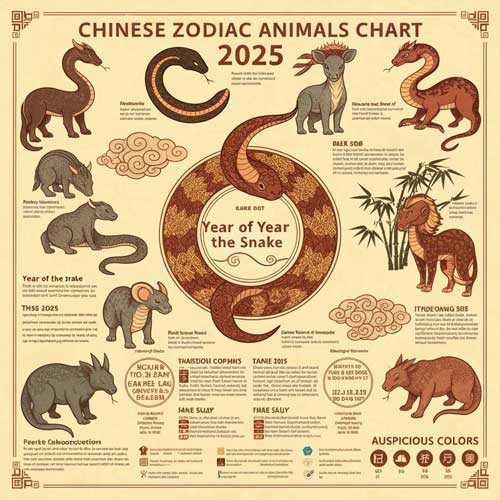
2025 Chinese New Year: January 29, 2025 (Year of the Snake 🐍)
How Long Is the Celebration?
Officially, the celebration lasts 15 days, starting on New Year’s Eve and ending with the Lantern Festival (元宵节, Yuánxiāo Jié).
However, the build-up starts weeks before, and in mainland China, the official public holiday is typically 7 days (though many people take extended leave).
Other Names for Chinese New Year
- 春节 (Chūnjié) – Spring Festival (most common in mainland China)
- 农历新年 (Nónglì Xīnnián) – Lunar New Year
- 过年 (Guònián) – “Passing the year” (colloquial)
The Legend Behind Chinese New Year
The Story of Nian (年兽)
According to ancient legend, there was a fierce monster called Nian (年) that would emerge from hiding on New Year’s Eve to terrorize villages, eating crops, livestock, and even people—especially children.
The villagers discovered three things scared Nian away:
- The color red
- Loud noises
- Fire and bright light
This is why Chinese New Year traditions include red decorations, firecrackers, and lanterns—they all originated from this legend of scaring away the Nian monster!
The word “过年” (guònián) literally means “to pass the year” or “to survive Nian”!
The Chinese Zodiac (生肖)
Each Chinese New Year is represented by one of 12 zodiac animals in a repeating cycle:
The 12 Animals:
- 🐭 Rat (鼠, shǔ)
- 🐮 Ox (牛, niú)
- 🐯 Tiger (虎, hǔ)
- 🐰 Rabbit (兔, tù)
- 🐲 Dragon (龙, lóng)
- 🐍 Snake (蛇, shé)
- 🐴 Horse (马, mǎ)
- 🐑 Goat (羊, yáng)
- 🐵 Monkey (猴, hóu)
- 🐔 Rooster (鸡, jī)
- 🐶 Dog (狗, gǒu)
- 🐷 Pig (猪, zhū)
2025 is the Year of the Snake!
People born in Snake years (2025, 2013, 2001, 1989, 1977…) are believed to be wise, intuitive, elegant, and mysterious.
Your “本命年” (Běnmìngnián) – Your Zodiac Year
When your zodiac year comes around (once every 12 years), it’s called your 本命年 (běnmìngnián).
Important tradition: During your zodiac year, you should wear red (especially red underwear!) to ward off bad luck. This is usually gifted by family members.
Essential Chinese New Year Traditions
1. 大扫除 (Dà Sǎochú) – The Big Clean
When: Days before New Year’s Eve
What: Families thoroughly clean their entire home to sweep away bad luck from the old year and make room for good fortune in the new year.
Important: NO cleaning on New Year’s Day itself! Sweeping or taking out trash on that day means you’re sweeping away your good luck!
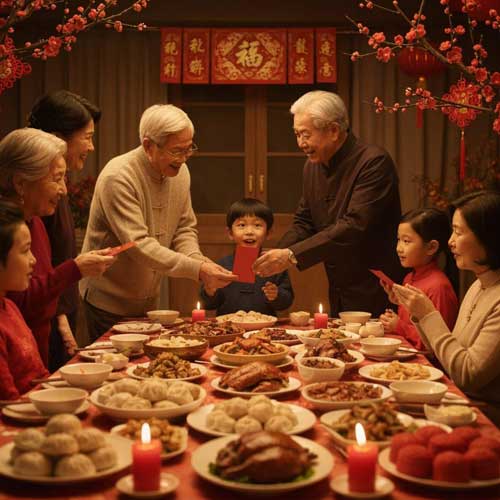
2. 年夜饭 (Niányèfàn) – Reunion Dinner
When: New Year’s Eve
What: The most important meal of the year! Families gather for an elaborate feast with symbolic dishes.
Why it matters: This dinner represents family unity. Chinese people travel thousands of miles to make it home for this meal—it’s the biggest human migration on Earth (called 春运, Chūnyùn)!
3. 红包 (Hóngbāo) – Red Envelopes
What: Red envelopes containing money
Who gives them: Married adults give them to children and unmarried young adults
Amounts: Usually even numbers (avoiding 4), with 8 being especially lucky
Common phrases when giving:
- 恭喜发财!(Gōngxǐ fācái!) – Wishing you prosperity!
- 新年快乐!(Xīnnián kuàilè!) – Happy New Year!
Modern twist: WeChat red envelopes (微信红包) are now extremely popular!
4. 守岁 (Shǒusuì) – Staying Up Late
When: New Year’s Eve into New Year’s Day
What: Families stay up past midnight to “guard the year” and welcome the new year together, often watching the CCTV Spring Festival Gala (春晚, Chūnwǎn).
Belief: The longer you stay awake, the longer your parents will live!
5. 拜年 (Bàinián) – New Year Greetings
When: First days of the new year
What: Visiting relatives, friends, and neighbors to exchange greetings and good wishes
Traditional gesture: 拱手 (gǒngshǒu) – clasping hands and bowing slightly, or 磕头 (kētóu) – kneeling and bowing (especially to elders)
6. 放鞭炮 (Fàng Biānpào) – Fireworks & Firecrackers
When: Midnight on New Year’s Eve and throughout the festival
Why: To scare away evil spirits and the Nian monster, and to celebrate!
Note: Many Chinese cities now ban fireworks due to pollution and safety concerns, but rural areas still enthusiastically practice this tradition.
Chinese New Year Decorations
春联 (Chūnlián) – Spring Couplets
What: Red paper scrolls with poetic phrases in black or gold calligraphy, posted on doorways
Content: Wishes for prosperity, health, and good fortune
Common phrases:
- 福 (fú) – Fortune/Blessing (often hung upside down because “upside down” 倒 sounds like “arrive” 到)
- 招财进宝 (zhāo cái jìn bǎo) – Bring in wealth and treasure
- 年年有余 (nián nián yǒu yú) – Surplus every year
红灯笼 (Hóng Dēnglóng) – Red Lanterns
Where: Hung outside homes, in streets, parks, and shopping centers
Symbolism: Prosperity, good luck, and warding off evil
窗花 (Chuānghuā) – Paper Cuttings
What: Intricate paper-cut designs featuring the zodiac animal, flowers, or the character 福
Where: Stuck on windows and doors
桔子树 (Júzi Shù) – Tangerine Trees
What: Small potted tangerine or kumquat trees with fruit
Why: The word for tangerine (橘, jú) sounds similar to “luck” (吉, jí)
Traditional Chinese New Year Foods
Every dish served during Chinese New Year has symbolic meaning!
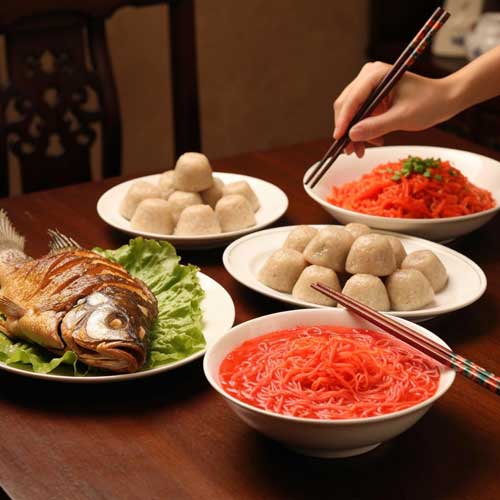
鱼 (Yú) – Fish 🐟
Symbolism: “年年有余” (nián nián yǒu yú) – Surplus every year
Tradition: The fish is served whole (with head and tail) and should NOT be finished—leaving some represents having surplus for next year!
饺子 (Jiǎozi) – Dumplings 🥟
Symbolism: Shaped like ancient gold/silver ingots, representing wealth
Tradition: Families make dumplings together. Sometimes a coin is hidden inside one dumpling—whoever gets it will have extra good luck!
Regional note: Especially important in Northern China
年糕 (Niángāo) – Sticky Rice Cake
Symbolism: “年年高” (nián nián gāo) – “Higher every year” (progress, growth, promotions)
Taste: Sweet and sticky
春卷 (Chūnjuǎn) – Spring Rolls
Symbolism: Shaped like gold bars, representing wealth
Regional note: Especially popular in Southern China
汤圆 (Tāngyuán) – Sweet Rice Balls
When: Eaten during Lantern Festival (15th day)
Symbolism: Round shape represents family reunion and togetherness
橘子/桔子 (Júzi) – Tangerines & Oranges 🍊
Symbolism: Good luck and wealth
Tradition: Exchanged as gifts when visiting others
瓜子 (Guāzǐ) – Melon Seeds
Symbolism: Fertility and having many children
Tradition: Constantly snacked on during visits
长寿面 (Chángshòu Miàn) – Longevity Noodles
Symbolism: Long life
Important: Never cut the noodles! Cutting them would “cut short” your life
Chinese New Year Taboos (Things to Avoid!)
During Chinese New Year, certain actions are believed to bring bad luck:
❌ Don’t Do These on New Year’s Day:
- No sweeping or taking out trash – You’ll sweep away good luck!
- No washing hair or clothes – Washing away good fortune
- No using scissors or knives – “Cutting off” good luck
- No saying unlucky words – Avoid: death (死, sǐ), sickness (病, bìng), break (破, pò), lose (输, shū)
- No breaking things – If you do, immediately say “岁岁平安” (suìsuì píng’ān – peace every year, because 碎 suì “broken” sounds like 岁 suì “year”)
- No crying or arguing – Sets a bad tone for the year
- Don’t wear black or white – These are funeral colors; wear red instead!
- No lending or borrowing money – Your wealth might flow away
- Don’t let medicine enter the house – Implies sickness for the year
- No giving clocks as gifts – “送钟” (sòng zhōng) sounds like “attending a funeral”
Red Envelope Etiquette:
Don’t:
- Give odd amounts (except amounts containing 8)
- Give amounts with the number 4 (sounds like “death”)
- Open red envelopes immediately in front of the giver
- Give empty or used red envelopes
Do:
- Use new, crisp bills
- Give even amounts
- Include the number 8 if possible (e.g., 88, 188, 888)
- Accept with both hands and thank the giver
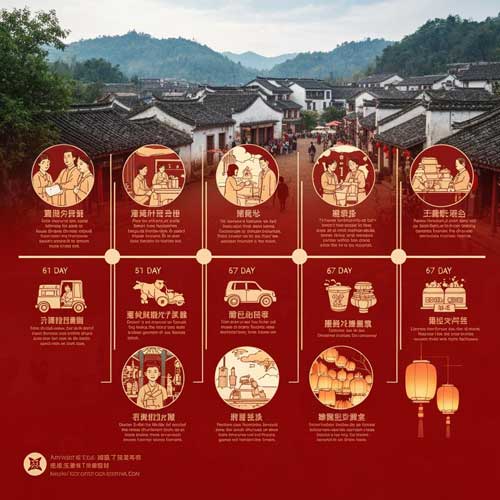
The 15-Day Chinese New Year Timeline
Day -1 (New Year’s Eve):
- Reunion dinner (年夜饭)
- Staying up late (守岁)
- Watching Spring Festival Gala on CCTV
- Midnight fireworks
Day 1 (New Year’s Day):
- First greetings of the year
- Firecrackers at dawn
- Wearing new clothes
- Visiting immediate family
- Temple fairs begin
Day 2:
- Married daughters visit their parents
- Praying to the God of Wealth (财神, Cáishén)
Day 3-4:
- Visiting extended family and friends
- Continuing celebrations
Day 5 (破五, Pòwǔ):
- “Breaking Five” – Many taboos can be relaxed
- Welcoming the God of Wealth
- Shops reopen
- Eating dumplings
Day 7 (人日, Rénrì):
- “Everyone’s Birthday”
- Eating noodles for longevity
Day 15 (元宵节, Yuánxiāo Jié – Lantern Festival):
- Official end of celebrations
- Lantern displays and parades
- Eating tangyuan (sweet rice balls)
- Solving lantern riddles
- Lion and dragon dances
Regional Differences in Celebration
Northern China:
- Dumplings are essential
- Colder weather = more indoor activities
- Ice lantern festivals in places like Harbin
Southern China:
- Nian gao (sticky rice cake) is more common
- Flower markets (especially Guangzhou)
- Spring rolls more popular
Hong Kong:
- Flower markets before New Year
- Horse racing on specific days
- Night parade
Taiwan:
- Temple fairs very popular
- Sky lantern festivals (especially in Pingxi)
Singapore/Malaysia:
- Yusheng (prosperity toss salad)
- Multicultural celebrations
- Bak kwa (barbecued meat) gifting
Common Chinese New Year Greetings
General Greetings:
- 新年快乐! (Xīnnián kuàilè!) – Happy New Year!
- 春节快乐! (Chūnjié kuàilè!) – Happy Spring Festival!
- 过年好! (Guònián hǎo!) – Happy New Year! (casual)
- 恭喜发财! (Gōngxǐ fācái!) – Wishing you prosperity!
Traditional Blessings (Four-Character Phrases):
- 万事如意 (wànshì rúyì) – May all your wishes come true
- 心想事成 (xīn xiǎng shì chéng) – May all your dreams come true
- 身体健康 (shēntǐ jiànkāng) – Good health
- 工作顺利 (gōngzuò shùnlì) – Success in work
- 学业进步 (xuéyè jìnbù) – Progress in studies
- 大吉大利 (dàjí dàlì) – Great fortune and luck
- 年年有余 (nián nián yǒu yú) – Surplus every year
- 财源滚滚 (cáiyuán gǔngǔn) – Endless wealth
- 阖家欢乐 (héjiā huānlè) – Family happiness
- 龙马精神 (lóng mǎ jīngshén) – Full of vigor
Modern Chinese New Year
Changes in Recent Years:
- Digital red envelopes – WeChat and Alipay red envelopes are hugely popular
- Online shopping – Buying New Year goods online instead of markets
- Travel – Some families travel abroad instead of traditional celebrations
- Environmental concerns – Fewer fireworks in cities
- Smaller families – One-child policy generation = different dynamics
What Remains the Same:
- Family reunion dinner is still sacred
- Red decorations everywhere
- Red envelope giving
- Watching CCTV Spring Festival Gala
- Massive travel rush (春运)
How to Participate as a Foreigner
If You’re Invited to a Chinese Family’s Celebration:
Do:
- Bring gifts (fruit basket, imported snacks, alcohol)
- Wrap gifts in red paper
- Learn a few greetings
- Dress in red if possible
- Be ready to eat A LOT
- Accept red envelopes graciously (if unmarried)
- Participate in games and activities
Don’t:
- Bring clocks, scissors, or anything in sets of 4
- Wear all black or all white
- Say unlucky words
- Refuse food (at least try everything!)
Chinese New Year Vocabulary Cheat Sheet
| Chinese | Pinyin | English |
|---|---|---|
| 春节 | Chūnjié | Spring Festival |
| 过年 | guònián | celebrate the new year |
| 年夜饭 | niányèfàn | reunion dinner |
| 红包 | hóngbāo | red envelope |
| 春联 | chūnlián | spring couplets |
| 鞭炮 | biānpào | firecrackers |
| 拜年 | bàinián | pay New Year visit |
| 守岁 | shǒusuì | stay up late on New Year’s Eve |
| 春晚 | chūnwǎn | Spring Festival Gala |
| 生肖 | shēngxiào | zodiac animal |
| 本命年 | běnmìngnián | zodiac year |
| 元宵节 | yuánxiāojié | Lantern Festival |
Cultural Significance: Why Chinese New Year Matters
Chinese New Year isn’t just a holiday—it’s a profound cultural phenomenon that reveals core Chinese values:
1. Family (家庭, Jiātíng)
The reunion dinner and the massive travel rush show how central family is to Chinese culture. No matter how successful you are, coming home for New Year is expected.
2. Respect for Elders (孝顺, Xiàoshùn)
The hierarchy of greetings, red envelope giving, and visiting order all reflect Confucian respect for elders.
3. Collective Harmony (和谐, Héxié)
Avoiding conflict, saying only auspicious things, and prioritizing group celebration over individual desires.
4. Symbolism & Superstition
Every food, decoration, and action carries meaning—showing the Chinese love of symbolism and belief in luck.
5. Cyclical Time
The 12-year zodiac cycle, the lunar calendar, and the emphasis on renewal reflect a cyclical view of time rather than linear.
Experience Chinese New Year Yourself!
Best cities to experience Chinese New Year:
- Beijing: Temple fairs, traditional celebrations
- Shanghai: Modern festivities, Yu Garden Lantern Festival
- Guangzhou: Flower markets, Cantonese traditions
- Hong Kong: Victoria Harbor fireworks, night parade
- Taiwan: Pingxi Sky Lantern Festival
- Singapore: Chinatown celebrations
Timing note: Many shops and restaurants close for several days, especially in smaller cities. Plan accordingly!
Final Thoughts
Chinese New Year is the cultural heartbeat of Chinese-speaking communities worldwide. Understanding these traditions helps you not just learn Chinese, but truly connect with Chinese culture and people.
Whether you celebrate with a Chinese family, observe traditions in Chinatown, or simply want to understand your Chinese friends better, knowing these customs shows respect and opens doors to deeper cultural appreciation.
新年快乐!万事如意! (Happy New Year! May all your wishes come true!)
🎓 Deepen Your Cultural Understanding Through Language
Learning about Chinese festivals is fascinating, but speaking about them in Chinese takes your understanding to a whole new level! When you can discuss traditions, ask questions, and share experiences in Mandarin, you truly connect with the culture.
I’m Candice, and I help students:
- ✅ Learn cultural vocabulary and expressions naturally
- ✅ Understand the “why” behind Chinese customs
- ✅ Navigate cultural situations with confidence
- ✅ Connect authentically with native speakers
👉 Ready to learn Chinese through cultural immersion? Explore my culturally-rich Mandarin lessons that go beyond textbooks!
Curious about my teaching philosophy? Learn more about my approach to teaching language through culture.
Find the right learning package for you: Check out my lesson options tailored to different goals and schedules.
Questions about Chinese culture or ready to start learning? Contact me today and let’s discuss how cultural understanding can accelerate your Chinese learning!