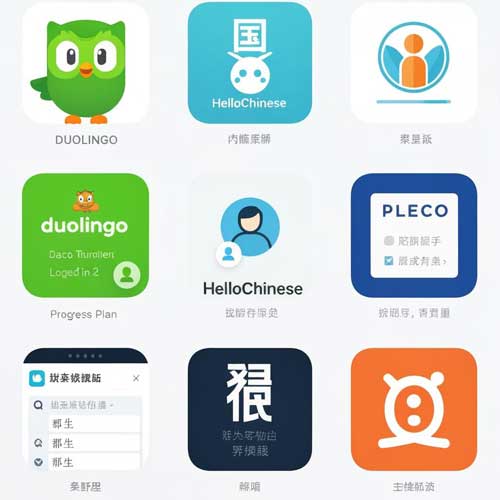
Want to learn Chinese but overwhelmed by the hundreds of apps promising to make you fluent? You’re not alone!
I’ve tested dozens of Chinese learning apps over the years—some amazing, some terrible, and many somewhere in between. This comprehensive guide cuts through the noise to reveal the 15 best apps for learning Chinese in 2025, based on real testing, student feedback, and proven results.
Whether you’re a complete beginner or preparing for HSK 6, you’ll find the perfect app (or combination of apps) for your learning goals! 📱
How to Choose the Right Chinese Learning App
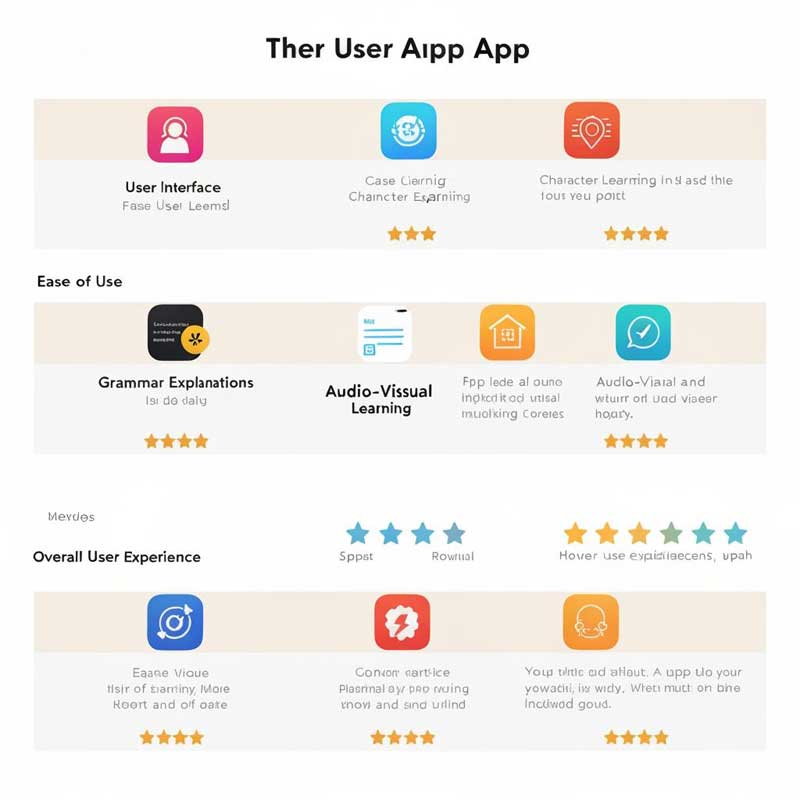
Before diving into specific app reviews, let’s establish what makes a Chinese learning app actually good.
Essential Features for Chinese Apps:
- Tone training – Not just showing tone marks, but actually training your ear and pronunciation
- Character stroke order – Animated demonstrations of proper character writing
- Pinyin progression – Starting with pinyin support, gradually removing it as you improve
- Speech recognition – Feedback on your pronunciation accuracy
- Spaced repetition – Smart review timing for long-term retention
- Cultural context – Not just vocabulary, but when and how to use it
- Grammar explanations – Clear breakdown of Chinese sentence structures
Red Flags to Avoid:
- ❌ Apps that ignore tones or treat them as optional
- ❌ No character writing practice (reading-only)
- ❌ Robotic, unnatural audio recordings
- ❌ Translation-focused without cultural context
- ❌ No grammar explanations (vocabulary lists only)
- ❌ Overly aggressive monetization (paywall after lesson 2)
The 15 Best Chinese Learning Apps (2025)
I’ve organized these apps by category to help you find exactly what you need!
🏆 Best All-in-One Learning Apps
These comprehensive platforms offer complete learning systems from beginner to advanced levels.
1. HelloChinese – Best Overall for Beginners
Price: Free with premium option ($12.99/month or $69.99/year)
Best for: Absolute beginners to intermediate learners (HSK 1-5)
What makes it great:
HelloChinese is hands-down the best comprehensive app for Chinese learners. It combines structured lessons, character writing practice, speech recognition, grammar explanations, and cultural notes into one polished package.
Key features:
- Progressive curriculum from pinyin basics to HSK 5
- Excellent tone training with visual feedback
- Built-in handwriting recognition for character practice
- Clear grammar explanations in English
- Gamified lessons that are actually educational
- Offline mode available
- Review system based on spaced repetition
Pros:
- ✅ Free version covers substantial content (through HSK 3)
- ✅ High-quality native speaker audio
- ✅ Well-structured, logical progression
- ✅ Works offline after downloading lessons
- ✅ Active community and support
Cons:
- ❌ Premium required for HSK 4-5 content
- ❌ Limited conversation practice
- ❌ Slower pace might frustrate fast learners
My verdict: If you’re starting from zero, HelloChinese is your best first app. The free version alone can take you surprisingly far!
2. ChineseSkill – Best Free Alternative
Price: Free with ads, premium removes ads ($9.99/month)
Best for: Beginners who want extensive free content
What makes it great:
ChineseSkill offers a completely free curriculum comparable to HelloChinese’s paid content. It uses gamification similar to Duolingo but is specifically designed for Chinese learning challenges.
Key features:
- 500+ lessons completely free
- Character stroke order animations
- Tone pronunciation training
- Speaking and listening exercises
- Progress tracking and achievements
- HSK 1-4 aligned content
Pros:
- ✅ Completely free (ads are minimal)
- ✅ Extensive content without paywalls
- ✅ Good for busy learners (short lessons)
- ✅ Regular content updates
Cons:
- ❌ Less polished interface than HelloChinese
- ❌ Grammar explanations less detailed
- ❌ Occasional translation errors
- ❌ Limited advanced content (stops at HSK 4)
My verdict: The best free option! If budget is tight, ChineseSkill delivers impressive value.
3. Duolingo Chinese – Most Popular (But Limited)
Price: Free with ads, Duolingo Plus ($12.99/month)
Best for: Complete beginners wanting casual learning
What makes it great:
Duolingo’s Chinese course has improved significantly, but still has limitations compared to Chinese-specific apps.
Key features:
- Familiar Duolingo interface and gamification
- Character recognition practice
- Basic conversation patterns
- Streak tracking for motivation
- Stories feature (limited for Chinese)
Pros:
- ✅ If you already use Duolingo for other languages, convenient to add Chinese
- ✅ Super beginner-friendly
- ✅ Good for establishing daily habits
- ✅ Free with substantial content
Cons:
- ❌ Tone training is weak
- ❌ No character writing practice
- ❌ Grammar explanations minimal
- ❌ Progression feels slow
- ❌ Speech recognition often inaccurate
- ❌ Limited content beyond basics
My verdict: Fine for absolute beginners or supplementary practice, but use HelloChinese or ChineseSkill as your primary app.
📖 Best Dictionary & Reference Apps
4. Pleco – Best Chinese Dictionary (Essential!)
Price: Free with paid add-ons ($15-$50 each)
Best for: ALL learners, any level
What makes it great:
Pleco isn’t just a dictionary—it’s THE essential tool every Chinese learner needs. Period.
Key features:
- Multiple dictionary sources (free and paid)
- Optical Character Recognition (OCR) – point your camera at Chinese text to translate
- Handwriting input recognition
- Stroke order diagrams
- Audio pronunciations
- Flashcard system built-in
- Example sentences for context
- Document reader (paid add-on)
Pros:
- ✅ Free version is incredibly powerful
- ✅ Most accurate OCR available
- ✅ Works offline (after downloading dictionaries)
- ✅ Constantly updated and supported
- ✅ Comprehensive character information
Cons:
- ❌ Interface looks dated (but it works perfectly)
- ❌ Learning curve for all features
- ❌ Best add-ons are iOS only
Recommended add-ons:
- OCR module ($14.99) – Absolutely worth it for reading Chinese in real life!
- Document Reader ($9.99) – For reading Chinese texts within Pleco
- Stroke order diagrams (Free!) – Essential for writing practice
My verdict: Non-negotiable. Every Chinese learner should install Pleco immediately. It’s been my constant companion for years!
5. Hanping Chinese Dictionary – Android Alternative
Price: Free (Lite) or $9.99 (Pro, one-time)
Best for: Android users wanting Pleco alternative
What makes it great:
If you’re on Android and want a slightly more modern interface than Pleco, Hanping is excellent.
Key features:
- Clean, modern interface
- Handwriting recognition
- Offline dictionaries
- Flashcard system
- Character decomposition
Pros:
- ✅ More modern UI than Pleco
- ✅ One-time purchase (no subscription)
- ✅ Good for Android users
Cons:
- ❌ Less comprehensive than Pleco
- ❌ No OCR in free version
- ❌ Android only
My verdict: Solid alternative, but Pleco is still superior for serious learners.
✍️ Best Character Writing Apps
6. Skritter – Best for Mastering Character Writing
Price: $14.99/month or $99.99/year (7-day free trial)
Best for: Learners serious about mastering handwriting
What makes it great:
If you want to truly master Chinese character writing, Skritter is unmatched. It uses spaced repetition with actual handwriting recognition.
Key features:
- Write characters with your finger/stylus on touchscreen
- Real-time stroke-by-stroke feedback
- Spaced repetition system optimized for characters
- Mnemonic hints and character decomposition
- Textbook integration (import vocabulary lists)
- Progress tracking and statistics
Pros:
- ✅ Most effective character writing practice available
- ✅ Excellent handwriting recognition
- ✅ Customizable study lists
- ✅ Works for Japanese too (if you’re learning both)
Cons:
- ❌ Expensive subscription
- ❌ Only focuses on writing (not a complete learning system)
- ❌ Requires consistent time investment
My verdict: Worth the investment if character writing is important to you (for academic study, HSK exams, or professional use). Not essential for casual learners.
7. HelloChinese Writing – Budget-Friendly Alternative
Price: Included in HelloChinese premium ($69.99/year)
Best for: HelloChinese users who want writing practice
What makes it great:
HelloChinese’s built-in writing feature offers solid handwriting practice at a better price point than Skritter.
Pros:
- ✅ Integrated with HelloChinese lessons
- ✅ Cheaper than Skritter
- ✅ Good for beginners
Cons:
- ❌ Less sophisticated than Skritter
- ❌ Fewer customization options
My verdict: Great value if you’re already using HelloChinese premium.
🗣️ Best Speaking & Conversation Apps
8. HelloTalk – Best for Language Exchange
Price: Free with VIP option ($12.99/month)
Best for: Practicing conversation with native speakers
What makes it great:
HelloTalk connects you with native Chinese speakers who want to practice English (or your native language) in exchange.
Key features:
- Text, voice, and video chat with native speakers
- Built-in translation and correction tools
- Moments feed (like social media for language learning)
- Voice/video calls
- Language correction features
Pros:
- ✅ Free to use core features
- ✅ Real conversations with native speakers
- ✅ Learn slang and current expressions
- ✅ Make friends internationally
Cons:
- ❌ Quality of conversations varies greatly
- ❌ Some users just want dating, not language exchange
- ❌ Can be time-consuming to find good partners
- ❌ Requires initiative and social confidence
My verdict: Essential for intermediate+ learners ready for real conversations. Takes effort to find quality partners, but worth it!
9. Tandem – Professional Language Exchange Alternative
Price: Free with Tandem Pro ($6.99/month)
Best for: Serious language exchange seekers
What makes it great:
Tandem has stricter quality control than HelloTalk, with verified profiles and community guidelines that reduce spam.
Pros:
- ✅ Better moderation than HelloTalk
- ✅ More serious learners
- ✅ Professional tutor options available
Cons:
- ❌ Smaller user base than HelloTalk
- ❌ Some features require subscription
My verdict: Try both HelloTalk and Tandem, see which community you prefer!
🎧 Best Listening & Immersion Apps
10. ChinesePod – Best Podcast-Style Learning
Price: Free (limited) or $14-$49/month
Best for: Audio learners, commuters, intermediate+ students
What makes it great:
ChinesePod offers thousands of podcast-style lessons with dialogue, explanations, and cultural notes at all levels.
Key features:
- Lessons at all levels (Newbie to Advanced)
- Real dialogue scenarios
- Detailed breakdowns and cultural explanations
- Downloadable for offline listening
- Flashcards and vocabulary lists
Pros:
- ✅ Huge library (10+ years of content)
- ✅ Natural conversations
- ✅ Perfect for commute study
- ✅ Great for listening comprehension
Cons:
- ❌ Expensive subscriptions
- ❌ Quality varies across lessons
- ❌ Website/app UX could be better
- ❌ Free tier very limited
My verdict: Excellent for intermediate+ learners who commute or exercise. Try the free tier first!
11. FluentU – Best for Learning Through Videos
Price: $30/month or $240/year (free trial available)
Best for: Visual learners who love authentic content
What makes it great:
FluentU turns authentic Chinese videos (music videos, commercials, news, talks) into interactive language lessons.
Key features:
- Real Chinese videos with interactive subtitles
- Click any word for instant definition
- Video-based flashcards
- Personalized quizzes
- Content at all levels
Pros:
- ✅ Learn from authentic content
- ✅ Engaging and entertaining
- ✅ Cultural immersion
- ✅ Interactive subtitles are brilliant
Cons:
- ❌ Very expensive
- ❌ Limited beginner content
- ❌ Requires good internet
My verdict: Expensive but unique. Better for intermediate+ learners. Try the free trial!
🃏 Best Flashcard & Vocabulary Apps
12. Anki – Best Spaced Repetition System
Price: Free (PC/Android), $24.99 one-time (iOS)
Best for: Serious learners who want maximum control
What makes it great:
Anki is the most powerful spaced repetition system available, used by medical students, lawyers, and serious language learners worldwide.
Key features:
- Fully customizable flashcard system
- Scientific spaced repetition algorithm
- Shared decks (thousands of Chinese decks available)
- Add images, audio, text
- Sync across devices
- Detailed statistics
Pros:
- ✅ Most effective long-term retention
- ✅ Completely customizable
- ✅ Free (except iOS)
- ✅ Huge community and shared decks
- ✅ Works offline
Cons:
- ❌ Steep learning curve
- ❌ Interface looks dated
- ❌ iOS app costs $25
- ❌ Requires discipline and consistency
Recommended decks:
- Spoonfed Chinese (sentences, not just words)
- HSK 1-6 decks
- Mandarin Chinese Sentence Deck
My verdict: The gold standard for vocabulary retention. Worth the iOS price and learning curve!
13. Memrise – Best User-Friendly Flashcard App
Price: Free or $8.99/month
Best for: Learners who find Anki too complicated
What makes it great:
Memrise offers spaced repetition with a more user-friendly interface than Anki, plus gamification elements.
Key features:
- Pre-made Chinese courses
- Video clips of native speakers
- Spaced repetition system
- Gamified learning
- Multiple review modes
Pros:
- ✅ More user-friendly than Anki
- ✅ Native speaker videos
- ✅ Good free tier
- ✅ Fun and engaging
Cons:
- ❌ Less customizable than Anki
- ❌ Some courses are low quality
- ❌ Premium features can be pricey
My verdict: Good middle ground between Anki’s power and casual app simplicity.
📝 Best HSK Preparation Apps
14. HSK Online – Best Official HSK Practice
Price: Free with premium features ($4.99-$9.99/month)
Best for: Preparing for official HSK exams
What makes it great:
Created by HSK test makers, this app offers official practice materials and mock tests.
Key features:
- Official HSK practice questions
- Mock tests for HSK 1-6
- Vocabulary lists by level
- Grammar explanations
- Progress tracking
Pros:
- ✅ Official materials
- ✅ Accurate practice tests
- ✅ Covers all HSK levels
- ✅ Free basic features
Cons:
- ❌ Interface is clunky
- ❌ Limited explanations in free version
- ❌ Focuses only on exam, not general learning
My verdict: Essential if you’re taking the HSK exam, but use alongside general learning apps.
15. SuperChinese – Rising Star All-in-One App
Price: Free trial, then $14.99/month or $59.99/year
Best for: Beginners to intermediate learners wanting structured progression
What makes it great:
SuperChinese is a newer comprehensive app that’s gaining popularity for its polished interface and effective teaching methods.
Key features:
- Structured courses HSK 1-6
- Video lessons with native teachers
- Interactive exercises (listening, speaking, reading, writing)
- Cultural tips and explanations
- Progress tracking
- Practice tests
Pros:
- ✅ Beautiful, modern interface
- ✅ High-quality video lessons
- ✅ Comprehensive skill coverage
- ✅ Good for visual learners
- ✅ Regular updates and improvements
Cons:
- ❌ Requires subscription (limited free content)
- ❌ Still building content library
- ❌ Less established than HelloChinese
My verdict: Promising newcomer! Try the free trial and see if the teaching style resonates with you.
About HSK 1 study guide, please check out my post about it
How to Build Your Ideal App Stack
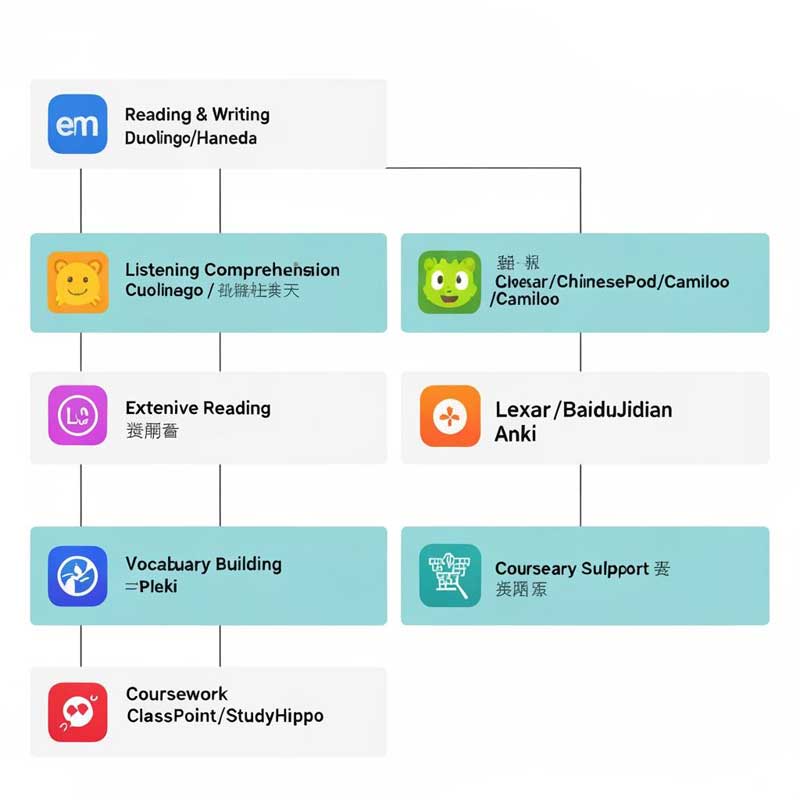
Don’t try to use all 15 apps at once! Here are proven combinations for different learner types:
🎯 The Complete Beginner Stack:
- HelloChinese (or ChineseSkill) – Main learning platform
- Pleco – Dictionary
- Anki (or Memrise) – Vocabulary review
Why this works: Structured learning + quick reference + long-term retention
🎯 The Serious Student Stack:
- HelloChinese – Structured lessons
- Skritter – Character writing mastery
- Pleco – Dictionary with OCR
- Anki – Spaced repetition
- HelloTalk – Conversation practice
Why this works: Comprehensive coverage of all four skills + real conversation
🎯 The HSK Test Prep Stack:
- HSK Online – Official practice
- ChineseSkill – Level-specific lessons
- Pleco – HSK vocabulary lists
- Anki – HSK flashcard decks
Why this works: Focused exam preparation with official materials
🎯 The Budget Learner Stack (100% Free!):
- ChineseSkill – Main learning
- Pleco (free version) – Dictionary
- Anki (PC/Android) – Flashcards
- HelloTalk (free tier) – Conversation
Why this works: Complete learning system without spending a penny!
🎯 The Intermediate Immersion Stack:
- ChinesePod – Listening practice
- Pleco with OCR – Reading real content
- HelloTalk – Daily conversation
- FluentU – Authentic videos
Why this works: Maximum exposure to authentic Chinese
Common App Learning Mistakes to Avoid
❌ App Hopping
The mistake: Downloading every new app, trying it for a week, getting bored, switching to another.
Why it fails: Language learning requires consistency. Constantly restarting prevents progress.
The solution: Choose 2-3 core apps and commit for at least 3 months before evaluating.
❌ Passive App Use
The mistake: Mindlessly tapping through lessons without thinking, just to complete daily streaks.
Why it fails: Surface-level engagement doesn’t create long-term retention.
The solution: Actively engage—speak out loud, write characters, think about meaning, review mistakes.
❌ App-Only Learning
The mistake: Believing apps alone will make you fluent.
Why it fails: Apps are tools, not complete solutions. You need real conversations, reading, and immersion.
The solution: Use apps as foundation, supplement with real content and conversations.
❌ Ignoring Free Trials
The mistake: Paying for expensive apps without testing them first.
Why it fails: Teaching styles vary—what works for others might not work for you.
The solution: Always use free trials before subscribing. Most apps offer 7-14 day trials.
❌ Subscription Overload
The mistake: Subscribing to multiple apps simultaneously ($50+/month total).
Why it fails: Financial stress + not enough time to use everything effectively.
The solution: Prioritize! 1-2 paid subscriptions maximum, fill gaps with free apps.
App Pricing Comparison (2025)
| App Name | Free Option | Premium Cost | Best Value |
|---|---|---|---|
| HelloChinese | Yes (through HSK 3) | $69.99/year | ⭐⭐⭐⭐⭐ |
| ChineseSkill | Yes (full access) | $9.99/month | ⭐⭐⭐⭐⭐ |
| Duolingo | Yes (with ads) | $12.99/month | ⭐⭐⭐ |
| Pleco | Yes (very good) | $15-50 add-ons | ⭐⭐⭐⭐⭐ |
| Skritter | 7-day trial | $99.99/year | ⭐⭐⭐⭐ |
| HelloTalk | Yes (core features) | $12.99/month | ⭐⭐⭐⭐ |
| ChinesePod | Limited | $14-49/month | ⭐⭐⭐ |
| FluentU | Free trial | $240/year | ⭐⭐ |
| Anki | Yes (PC/Android) | $24.99 (iOS only) | ⭐⭐⭐⭐⭐ |
| Memrise | Yes (limited) | $8.99/month | ⭐⭐⭐⭐ |
My Personal App Recommendations by Level
Absolute Beginner (Never studied Chinese):
Start with:
- HelloChinese (free version) – Learn basics systematically
- Pleco (free) – Look up words instantly
- Memrise (free) – Review vocabulary daily
Time commitment: 20-30 minutes/day
Budget: $0
Elementary (HSK 1-2 completed):
Add to stack:
- Continue HelloChinese (consider premium)
- Upgrade to Anki for better retention
- Add HelloTalk for simple text conversations
Time commitment: 30-45 minutes/day
Budget: $0-70/year
Intermediate (HSK 3-4):
Shift to immersion:
- HelloChinese Advanced or SuperChinese
- Pleco with OCR (reading real content)
- ChinesePod or FluentU
- HelloTalk (daily conversations)
- Anki (sentence mining from content)
Time commitment: 45-60 minutes/day
Budget: $150-300/year
Advanced (HSK 5-6):
Focus on authentic content:
- Pleco (professional dictionaries)
- Native content apps (Chinese apps, not learning apps!)
- HelloTalk/Tandem (advanced discussions)
- Anki (mining from books, shows, news)
Time commitment: 60+ minutes/day immersion
Budget: Minimal (mostly free native content)
Frequently Asked Questions
Can I become fluent using only apps?
Honestly? No. Apps are fantastic tools for building foundation, vocabulary, and character recognition, but they can’t replace real conversations, reading authentic content, and cultural immersion. Think of apps as your gym equipment—they help you train, but you still need to play the actual game!
Which app is best for complete beginners?
HelloChinese is the best overall for beginners. It’s comprehensive, well-structured, has excellent free content, and specifically addresses Chinese language challenges. ChineseSkill is a close second if you want more free content.
Do I need to pay for apps to learn Chinese effectively?
No! You can learn Chinese very effectively using free apps: ChineseSkill + Pleco + Anki (on PC/Android) + HelloTalk = completely free and comprehensive. Premium apps offer convenience and polish, but aren’t necessary for success.
How many apps should I use simultaneously?
3-5 apps maximum! More specifically: 1 main learning platform, 1 dictionary, 1 flashcard system, 1 conversation/immersion app. Having too many apps leads to scattered focus and wasted time.
Is Duolingo Chinese worth it?
For absolute beginners wanting ultra-casual learning, yes. For serious learners, no—HelloChinese and ChineseSkill are significantly better for Chinese-specific challenges like character writing and tone training.
Should I pay for Skritter?
Only if handwriting is important to you (academic study, professional use, or HSK exams). If you’re learning Chinese primarily for conversation and reading digital text, the free writing practice in HelloChinese is sufficient.
What’s the best app for learning Chinese characters?
Skritter for serious mastery, HelloChinese for integrated character learning, Anki for recognition/meaning retention. Choose based on your goals and budget.
Can I use these apps offline?
Partially. Pleco (after downloading dictionaries), HelloChinese (after downloading lessons), and Anki work completely offline. Most other apps require internet connection, though some allow lesson downloads.
Are there apps specifically for HSK exam preparation?
Yes! HSK Online (official), ChineseSkill (aligned with HSK levels), and HelloChinese (HSK-structured curriculum) all work well for exam prep. Supplement with Anki flashcards for HSK vocabulary lists.
How long should I use an app before switching?
Give an app at least 3 months of consistent use before deciding it’s not working. Language learning requires time to show results. Exception: If an app’s teaching style fundamentally doesn’t match your learning style, switch immediately.
Final Thoughts: Apps Are Tools, Not Magic
After years of teaching Chinese and testing dozens of apps, here’s my honest take:
Apps are incredible tools for building foundation, maintaining consistency, and practicing specific skills. They’ve made Chinese learning more accessible than ever before!
However, apps alone won’t make you fluent. Think of them as your training wheels—essential when starting, helpful as you progress, but eventually you need to ride on your own.
The real magic happens when you:
- Use apps to build foundation, then supplement with real content
- Practice app lessons, then use that vocabulary in real conversations
- Learn characters in apps, then read actual Chinese books/websites
- Study tones in apps, then listen to Chinese podcasts/shows
Apps are most powerful when combined with real-world practice!
My recommendation: Start with HelloChinese (or ChineseSkill) + Pleco + Anki. Use them consistently for 3-6 months. Then gradually add conversation practice, authentic content, and eventually reduce app reliance as you build real-world fluency.
Remember: The best app is the one you’ll actually use consistently. Choose based on your learning style, budget, and goals—not just what’s popular!
准备好开始了吗?(Ready to start?) Download a few apps and begin your Chinese learning journey today! 加油!(Jiāyóu! = Keep going!)
🎓 Ready to Move Beyond Apps?
Apps are excellent for building your foundation, but if you’re ready to accelerate your progress with personalized guidance, structured curriculum, and real conversation practice, working with an experienced teacher makes all the difference!
I’m Candice, and I help students:
- ✅ Choose the right apps and resources for your specific goals
- ✅ Create personalized study plans that actually work
- ✅ Practice real conversations (beyond app exercises)
- ✅ Get immediate feedback on pronunciation, tones, and grammar
- ✅ Stay accountable and motivated through challenges
👉 Curious about personalized Chinese lessons? Explore my teaching approach and see how one-on-one instruction complements self-study!
Want to know more about me? Learn about my background and why I’m passionate about making Chinese accessible to everyone.
Find the right package for you: Check out my lesson options designed for different learning goals and schedules.
Questions about apps, resources, or ready to start lessons? Contact me today and let’s discuss your Chinese learning journey!
Which apps are you currently using? Share your favorites in the comments below!