
Beginners Should Learn These 10 Common Chinese Phrases

Want to start speaking Chinese right away? Start with these 10 essential phrases with proper pronunciation, pinyin writing system and practical usage examples - ideal for absolute beginners!
Beginner students learning common Chinese phrases with native tutor

Why These Phrases Matter for Chinese Learners

Starting to learn Chinese can feel overwhelming, but mastering a few key phrases will help you communicate right away. These 10 phrases are essential for everyday conversations and will give you the confidence to practice with native speakers.

Whether you’re traveling to China, connecting with Chinese-speaking friends, or preparing for business opportunities, these phrases form the foundation of successful communication. And if you want personalized guidance, consider booking one-on-one Chinese lessons to accelerate your learning.

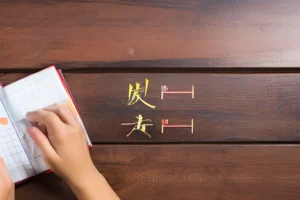
Hand writing the Chinese phrase 你好 (hello) in notebook

The 10 Essential Chinese Phrases for Beginners

1. 你好 (Nǐ hǎo) – Hello

Pinyin: Nǐ hǎo
Literal meaning: You good
Tone marks: nǐ (3rd tone) + hǎo (3rd tone)

The most basic and important greeting in Mandarin Chinese. Use it anytime you meet someone, formal or casual. The third tone dips down and then rises slightly—mastering this tone is crucial for clear communication.

💬 Example Conversation:

你好!很高兴认识你。

Nǐ hǎo! Hěn gāoxìng rènshi nǐ.

Hello! Nice to meet you.

💡 Pro Tip: When greeting someone more formally, you can say 您好 (nín hǎo).

2. 谢谢 (Xièxie) – Thank you

Pinyin: Xièxie
Tone marks: xiè (4th tone) + xie (neutral tone)

Show your gratitude with this simple phrase. You can also say 谢谢你 (xièxie nǐ) or, for formal cases, 非常感谢 (fēicháng gǎnxiè) – “thank you very much.”

💬 Example:

谢谢你的帮助!

Xièxie nǐ de bāngzhù!

Thank you for your help!

3. 对不起 (Duìbuqǐ) – Sorry / Excuse me

Pinyin: Duìbuqǐ
Tone marks: duì (4th) + bu (neutral) + qǐ (3rd)

Use this to apologize or get someone’s attention politely. More casually, say 不好意思 (bù hǎoyìsi).

💬 Example:

对不起,我迟到了。

Duìbuqǐ, wǒ chídào le.

Sorry, I’m late.

Student studying Mandarin Chinese pronunciation with online tools.

Expert Tips for Learning These Chinese Phrases

💡 Practice Daily with Consistency

Spend 10–15 minutes each day repeating these phrases out loud. If you want structured guidance, contact me for personalized lessons.

🎧 Listen to Native Speakers

Use apps like HelloChinese or Pleco, or listen to podcasts. Learn more about my teaching approach.

✍️ Write Them Down

Practice writing characters and pinyin together. I provide custom writing exercises in my online Chinese lessons.

🗣️ Use Them in Real Situations

Try speaking with friends or in real-life contexts—practice builds confidence!

Next Steps in Your Mandarin Chinese Learning Journey

🎯 Key Takeaway

Start using these phrases TODAY in real situations and enjoy your Chinese journey!

Tags:#Phrases#Beginner#Speaking#Pronunciation

About Candice – Your Mandarin Tutor

Native Mandarin speaker and certified Chinese tutor with 5+ years of experience.

I’ve helped students from 20+ countries learn Chinese confidently.Learn More About My Teaching Method →

🚀 Ready to Master Chinese with a Native Tutor?

Stop struggling with self-study and get real feedback from a native teacher.

📧 Book Free 15-Min Consultation💰 View Lesson Packages

📚 Continue Your Chinese Learning Journey

Beginner Tips

Chinese Tones Made Easy

⏱ 6 min read

📧 Get Weekly Chinese Learning Tips

Subscribe Free

🔒 Unsubscribe anytime. Privacy Policy.

Frequently Asked Questions

How long does it take to learn these 10 Chinese phrases?

Most students can memorize and use these phrases in 1–2 weeks.

Why can i understand this phrase?

please read my article about the sentence structrue.

Share:

More Posts

Chinese vocabulary building system showing categorization, memorization techniques, and review schedule

Build Your Chinese Vocabulary Systematically | Expert Guide

This comprehensive guide provides a structured approach to building your Chinese vocabulary effectively. Learn how to categorize words by themes like family, food, and travel to create meaningful connections. Discover powerful memorization techniques including spaced repetition, mnemonics, and character component analysis. The article explains how to organize vocabulary into practical categories and implement systematic review schedules. You’ll find strategies for moving vocabulary from passive recognition to active usage through contextual learning and practical application. The guide also covers how to expand your vocabulary by understanding word families, measure words, and cultural context. Whether you’re a beginner or intermediate learner, these systematic methods will help you build a strong vocabulary foundation and accelerate your Mandarin proficiency.

Chinese character 被 with pinyin bèi showing passive voice construction examples

Master Chinese Passive Voice: Complete Grammar Guide & examples

This comprehensive guide demystifies the Chinese passive voice, covering everything from the fundamental 被 (bèi) structure to alternative passive constructions. You’ll learn how to form passive sentences correctly, understand when to use them, and discover important cultural considerations that affect passive voice usage in Mandarin. The article provides clear explanations of different passive markers including 让, 叫, and 给, along with practical examples showing how they differ from English passive voice. You’ll also find common mistakes to avoid, practice exercises, and strategies for mastering this essential grammar point. Whether you’re a beginner or advanced learner, this guide will help you use Chinese passive voice naturally and accurately in both spoken and written contexts.

Chinese radicals as building blocks forming complete characters

Master Chinese Radicals: Build Characters Faster & Smarter

This comprehensive guide reveals how Chinese radicals serve as the essential building blocks for mastering Mandarin characters. You’ll discover what radicals are, why they’re crucial for efficient learning, and how they provide semantic and phonetic clues. The article breaks down radical categories and functions, offering practical strategies for memorization and recognition. Learn to decode complex characters by understanding their radical components, significantly accelerating your reading comprehension. The guide includes study techniques, common radical examples with meanings, and tips for integrating radical knowledge into your daily practice. Whether you’re beginning your Chinese journey or looking to strengthen your character recognition, this radical-focused approach will transform how you learn and remember Chinese writing system.

Diagram showing Chinese relative clause structure with 的 particle connecting modifier and noun

Mastering Relative Clauses in Mandarin Chinese Grammar

This comprehensive guide demystifies relative clauses in Mandarin Chinese, a fundamental grammatical structure that often challenges learners. Unlike English, Mandarin uses a unique particle-based approach with 的 (de) to create descriptive phrases that modify nouns. The article breaks down the basic structure, provides numerous practical examples across different contexts, and explains how to handle more complex scenarios like multiple modifiers and location/time references. You’ll learn common mistakes to avoid and discover effective practice strategies to master this essential grammar point. Whether you’re describing people, objects, or situations, understanding relative clauses will significantly improve your Chinese fluency and allow you to express more complex ideas with confidence. The guide includes cultural insights and connects this grammatical concept to broader language learning approaches.

Send Me A Message